 blog
blog
Storefront Window Branding Cost: 2026 Pricing Guide
Table of Contents
- What Drives Storefront Window Branding Cost
- Storefront Window Graphics Cost Breakdown
- Perforated Window Film: Pricing and Performance
- Window Graphic Installation Cost and Labor
- Retail Window Display Ideas That Maximize ROI
- Durability, Warranties, and Lifecycle Cost
- Getting an Accurate Quote for Your Project
- Frequently Asked Questions
Last Updated: October 17, 2026
What Drives Storefront Window Branding Cost
Understanding storefront window branding cost in 2026 depends on five core factors that determine your final invoice. Understanding each one helps you build an accurate budget and avoid surprises when you get your quote. At Pearl Wrapz, we've worked with retail locations across North Texas and southern Oklahoma, and the businesses that get the best results are the ones who understand what influences pricing before they commit.
Window size is the most obvious cost driver. A small single-pane window costs far less than a full storefront wrap. But there's more to it than just square footage. The shape of your windows, how many panels you have, and whether you need custom sizing all affect the final price. Material choice matters equally. Vinyl graphics, perforated film, and specialty substrates each have different production costs and durability profiles. Design complexity is where costs can shift dramatically.
Window Size and Coverage Area
Larger windows cost more simply because they require more material. A small 2-by-3-foot window graphic is cheaper than a 10-by-15-foot storefront wrap. Most pricing scales with square footage, so understanding your exact dimensions is critical before requesting a quote.
Custom sizing adds flexibility but can increase costs. Off-the-shelf standard sizes cost less than custom cuts. If your window dimensions don't match common sizes, you'll pay a premium for custom production. Measure your windows carefully, width, height, and any curved or angled sections. Provide these measurements when you request a quote so the estimate reflects your actual space.
Multi-panel window setups present a choice. You can treat the entire storefront as one large graphic, or break it into separate panels. One continuous design often costs less per square foot than multiple individual graphics, but it requires more planning during installation.
Material Selection: Vinyl Graphics vs. Perforated Film
Vinyl graphics are the traditional choice for window branding. They block light completely and provide vibrant color. Perforated film, by contrast, allows visibility through the graphic while displaying your message. The choice affects both cost and function.
Vinyl graphics typically cost less upfront than perforated film because the production process is simpler. Perforated film requires precise perforation patterns, which adds manufacturing complexity. However, perforated film offers a unique advantage: customers can see into your store while your branding remains visible from outside. This matters for retail locations where window displays drive foot traffic.
Material durability also influences long-term cost. The initial material cost difference is often smaller than the cost difference of replacing a graphic that failed early.
Design Complexity and Custom Artwork
Simple designs cost less than complex ones. A single-color logo or text is the least expensive option. Multi-color designs with gradients, photographic elements, or intricate illustrations increase production time and cost.
Custom artwork created specifically for your project costs more than using existing designs. If you bring a finished design file, production costs are lower. If you need a designer to create custom artwork, that's a separate service fee. Many businesses underestimate this cost. Pearl Wrapz includes design consultation in our process, which helps you avoid costly revisions later.
Photographic images in window graphics require high-resolution files and careful color matching. This adds complexity. Illustrative or graphic-based designs are often simpler to produce and can be equally eye-catching.
Storefront Window Graphics Cost Breakdown
The total cost of storefront window branding breaks down into three main components: material, design, and installation. Knowing what each piece costs helps you understand where your money goes and where you might find savings without sacrificing quality.
Material cost is the largest component for most projects. It includes the vinyl or film itself, printing, and any finishing treatments. Design cost covers the creative work, whether that's using an existing design or creating something new. Installation cost covers labor, site preparation, and any protective measures needed during application.
Cost Per Square Foot in 2026
Pricing per square foot varies based on material type and design complexity. Perforated film costs more per square foot than standard vinyl because of the specialized production process.
Your location affects pricing. Urban areas with higher labor costs and more competition may offer different pricing than rural areas. Regional service availability also matters, if your location is harder to reach, installation costs may be higher.
Project size influences per-square-foot pricing. Larger projects often have lower per-square-foot costs because setup and preparation costs are spread across more material. A 50-square-foot project costs more per square foot than a 200-square-foot project.
Single-Panel vs. Multi-Panel Window Setups
Single-panel windows are simpler to design and install. The entire graphic is one continuous piece. This reduces complexity and often reduces labor time. Single-panel setups work well for small storefronts or when you want one unified message.
Multi-panel setups break the graphic into separate sections that fit individual window panes. This approach allows more design flexibility and can make installation easier on some window types. However, it requires more precise alignment and more installation time. The total material cost may be higher because each panel requires individual production.
Transitional designs that flow across multiple panels are more complex to execute. They require perfect alignment and coordination between panels. This complexity increases both design and installation costs but creates a more professional, cohesive appearance.
Perforated Window Film: Pricing and Performance
Perforated window film is a specialized material that deserves its own consideration. It costs more than standard vinyl but offers unique benefits that justify the investment for many retail locations.
Perforated film allows light to pass through while displaying your graphics. From inside your store, the film is nearly invisible, so customers can see your window displays. From outside, passersby see your branding clearly.
The perforations are tiny holes arranged in patterns. The pattern density determines how much visibility you have. Higher visibility (more holes) costs more to produce but lets more light through. Lower visibility (fewer holes) maintains stronger branding but blocks more light.
Durability of perforated film is comparable to vinyl graphics when properly installed. Perforated film is slightly more prone to damage from improper cleaning because the perforations can catch on rough cloths or abrasive materials.
Window Graphic Installation Cost and Labor
Installation is where many businesses encounter unexpected costs. Professional installation is more expensive than DIY but delivers results that last. Understanding the labor component helps you budget accurately.
Installation cost depends on window condition, surface preparation, accessibility, and complexity. Clean, well-maintained windows take less time to prepare than dirty or damaged ones. Accessible windows on ground level cost less to install than windows on upper floors or in hard-to-reach locations.
Professional Installation vs. DIY
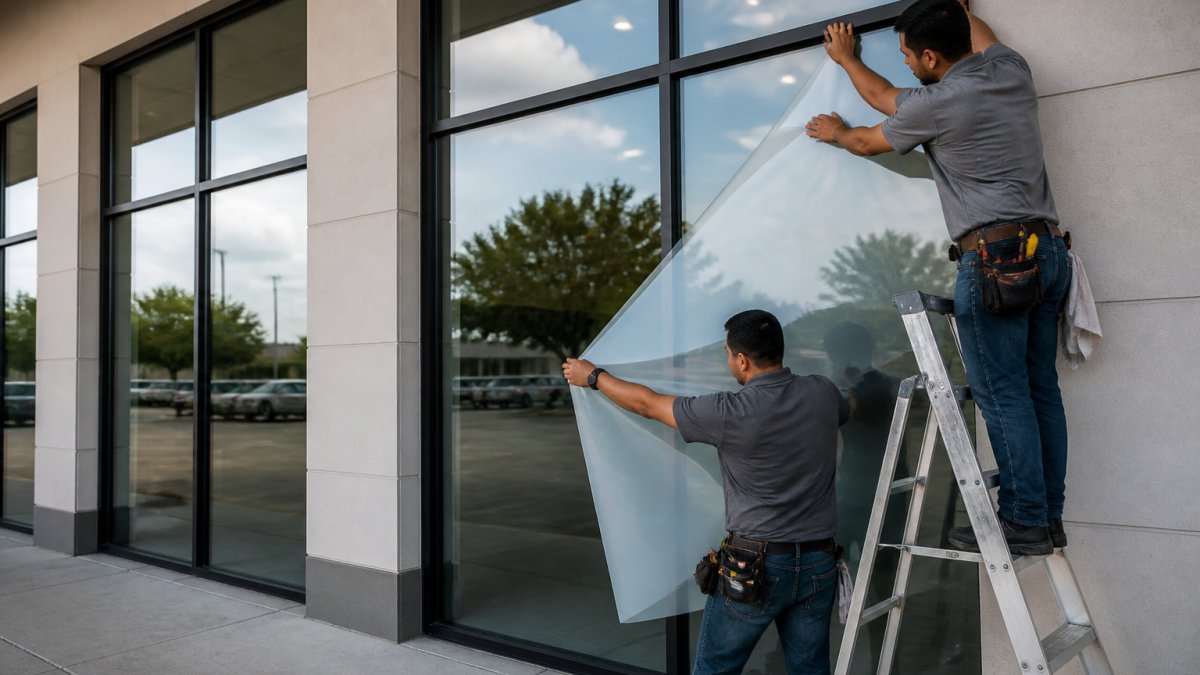
Professional installation guarantees proper application, correct alignment, and longevity. Installers have the right tools, experience with different window types, and insurance to cover any issues. Professional installation typically takes 1-3 days depending on project size, and the work is warrantied.
DIY installation is cheaper upfront but carries risks. Without proper tools and experience, you might damage the graphic during application, create air bubbles, or misalign the design. If something goes wrong, you've lost the material cost and your time. Most retail owners find that professional installation pays for itself through reliability and appearance.
Some businesses choose a hybrid approach. Pearl Wrapz can provide the finished graphic and guidance for DIY installation, or we can handle the entire project from design through installation. The choice depends on your confidence level, available time, and tolerance for risk.
Regional Service Area and Timeline
Service availability varies by region. Urban areas typically have faster turnaround times because installation teams are closer. Rural or remote locations may require longer lead times to schedule service.
Timeline also depends on project complexity and current workload. Simple projects might be completed within a week. Complex custom designs may take 2-4 weeks from approval to installation. Peak seasons (holiday retail season, spring renovations) can extend timelines significantly.
Weather affects installation timing. Vinyl and perforated film adhere best in moderate temperatures. Installation in extreme heat or cold may be delayed or require special procedures. Winter installations take longer because of temperature and humidity conditions.
Retail Window Display Ideas That Maximize ROI
Your storefront window graphics should do more than look good, they should drive traffic and sales. The best designs combine visual impact with a clear message that converts passersby into customers.
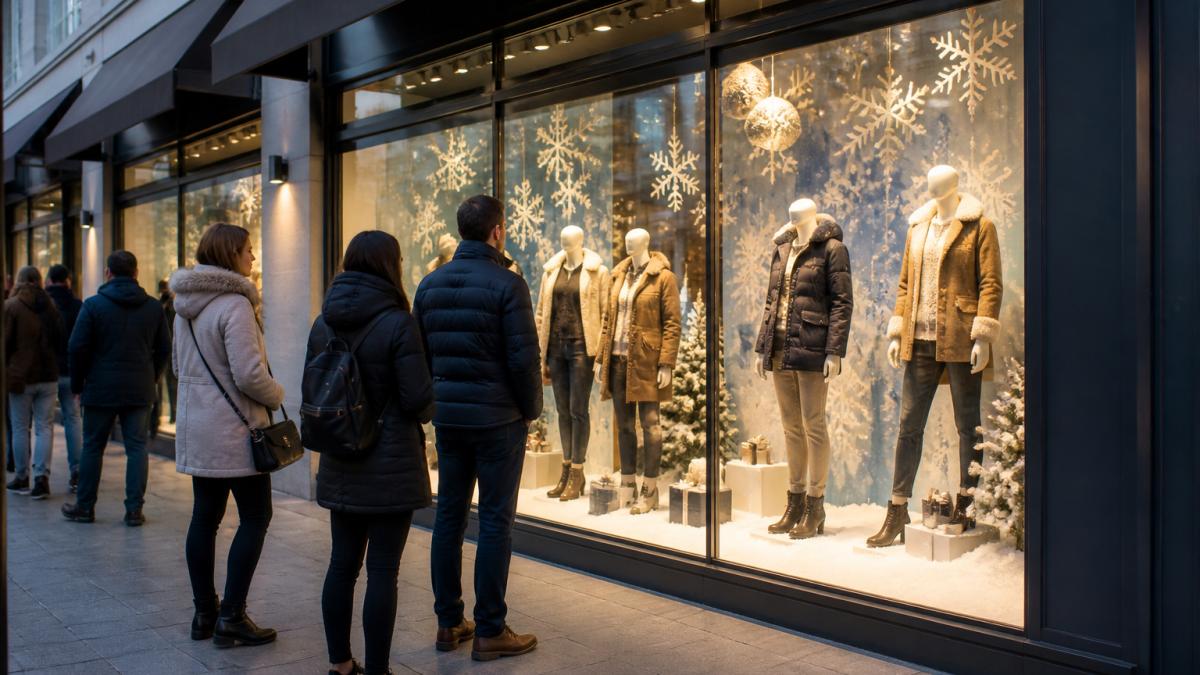
Seasonal promotions displayed prominently in your window create urgency. Limited-time offers, new arrivals, and seasonal collections grab attention and encourage immediate action.
Product imagery works better than abstract designs for most retail locations. Show what customers can buy, not just your brand colors.
Social proof elements, customer testimonials, bestseller badges, award logos, build trust. These small additions increase conversion rates because they signal quality and popularity.
Call-to-action messaging is critical. "Shop Now," "Limited Time," "Exclusive Offer", clear directives tell people what to do next. Vague messaging leaves people confused about whether they should enter your store.
Location matters for readability. Text and key visuals should be positioned where they're visible from the street. Consider sightlines from vehicles traveling at normal speed.
Durability, Warranties, and Lifecycle Cost
The cheapest option upfront isn't always the best value.
Material quality directly affects lifespan. Premium vinyl and perforated film resist fading, cracking, and peeling better than budget alternatives. UV-protective coatings extend life significantly. Proper installation and maintenance also matter, a well-installed graphic from a quality provider lasts longer than the same material installed poorly.
Warranties vary by provider and material. Warranties typically cover material defects but not damage from improper maintenance or extreme weather.
Maintenance extends graphic lifespan. Regular gentle cleaning with mild soap and soft cloths keeps graphics looking sharp. Avoiding harsh chemicals and abrasive materials prevents premature fading and damage. Most graphics require minimal maintenance if properly installed.
Replacement cost should factor into your decision. If your first graphic lasts 3 years and costs a certain amount, you'll need to replace it twice as often as a graphic that lasts 6 years. The lifecycle cost of the longer-lasting option is often lower despite higher upfront cost.
Getting an Accurate Quote for Your Project
An accurate quote requires specific information about your windows, design, and timeline. Vague requests lead to vague estimates that don't reflect your actual project.
Measure your windows precisely. Note width, height, and any curved or angled sections. Take photos from multiple angles showing the window in context. Note the window material (glass, plastic, textured).
Clarify your design. Do you have an existing design file, or do you need design services? Describe your vision clearly. Provide brand guidelines if you have them.
State your timeline. When do you need the project completed? Rush timelines may incur additional fees. Conversely, flexible timelines sometimes allow lower pricing because the provider can schedule efficiently.
Request an itemized quote that breaks down material cost, design cost, and installation cost separately. This transparency helps you understand where your money goes.
Transforming your storefront into a powerful brand asset starts with understanding what you're investing in.
Frequently Asked Questions
How much do storefront window graphics cost?
Storefront window graphics pricing depends on window size, material type, design complexity, and installation method. Vinyl graphics and perforated window film have different cost structures. Professional installation adds labor costs that vary by region and project scope. For accurate 2026 pricing tailored to your specific storefront dimensions and design needs, contact Pearl Wrapz for a detailed quote that breaks down material, design, and installation separately.
What affects the cost of storefront window branding?
Six primary factors influence total project cost: window dimensions and square footage, material selection (standard vinyl vs. perforated film), design complexity and custom artwork, installation method (professional vs. DIY), regional labor rates, and whether the graphics are permanent or removable. Larger windows, custom designs, and professional installation increase costs. Perforated window film typically costs more than basic vinyl but offers privacy and durability benefits that justify the premium for many retail applications.
How long do storefront window graphics last?
Durability depends on material grade, UV protection, climate conditions, and maintenance. Removable graphics may show wear faster than permanent installations. Seasonal replacements or updates cost less than initial installation, making graphics a cost-effective way to refresh your retail window display ideas annually or as needed.
Can storefront window graphics be removed without damaging the glass?
Yes, professional-grade removable vinyl graphics and perforated window film are designed to peel away cleanly without leaving residue or damaging glass. Removal quality depends on proper installation technique and how long the graphics have been in place. Professional removal services ensure no damage occurs. This removability is a key advantage for seasonal campaigns, sales promotions, and businesses that update their storefront window graphics cost-effectively without replacement costs each time you refresh your branding or messaging.