 Comparison
Car Wrap City Alternatives for Fleets
Table of Contents
- Why Fleet Managers Choose Alternative Wrap Providers
- Fleet Vehicle Wrap Companies: What to Compare
- Fleet Wrap Cost: Transparent Pricing and Total Cost of Ownership
- 3M vs Avery Dennison Wrap: Material Quality for Fleet Durability
- Fleet Wrap Design: Creating Brand Consistency Across Vehicles
- Vendor Selection Scorecard for Fleet Wraps
- Conclusion
- Frequently Asked Questions
Last Updated: October 21, 2026
Why Fleet Managers Choose Alternative Wrap Providers
Vehicle wraps aren't a luxury for a commercial fleet, they're a branding asset that works 24/7.
You need a partner who handles multiple vehicles at once, maintains design consistency, and delivers predictable timelines, someone who treats your fleet as a strategic investment.
Pearl Wrapz helps businesses in North Texas and southern Oklahoma transform their physical spaces into powerful brand assets.
This guide walks you through what to compare when evaluating fleet vehicle wrap companies, how to assess total cost of ownership, and how to structure a vendor selection process that protects your brand and your budget.
Fleet Vehicle Wrap Companies: What to Compare
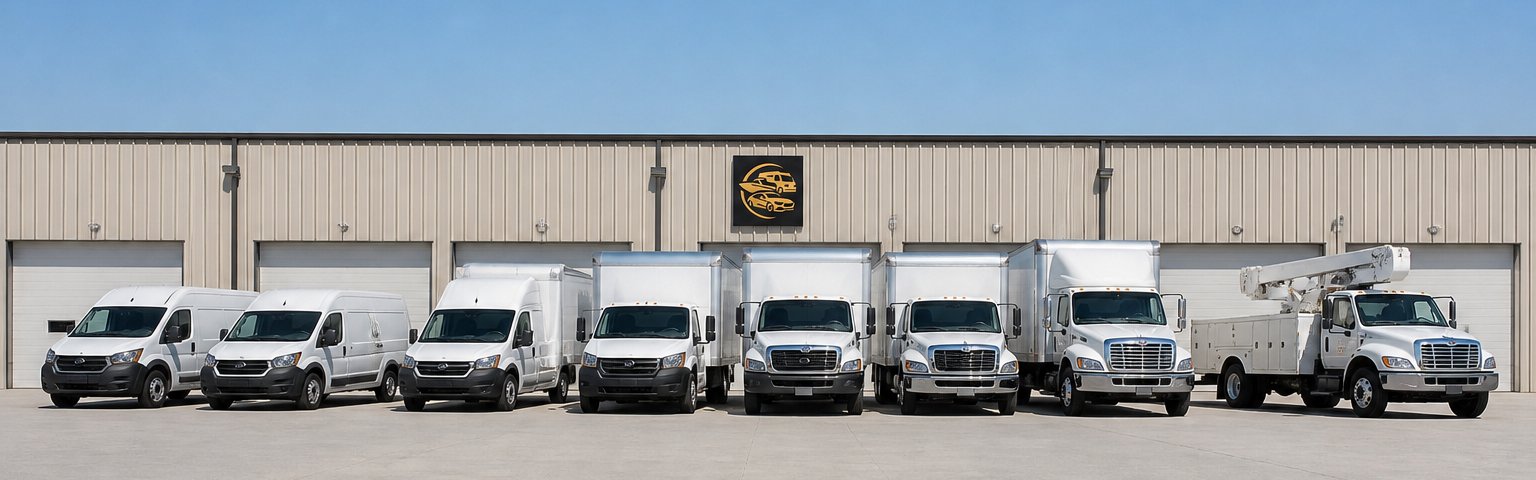
Not all wrap providers are built for fleet work, some specialize in one-off vehicle wraps, others in retail graphics. The ones that excel at fleet projects share specific capabilities for coordinating multiple vehicles, locations, and design consistency.
Multi-location Installation and Coordination
Fleet work requires logistical coordination single-location providers often can't handle. With vehicles in different cities or service areas, you need a partner who manages installation across those locations without bottlenecks.
The best fleet vehicle wrap companies maintain their own installation network or verified local installer partnerships in your fleet's regions, so vehicles don't sit idle waiting for a technician from a central hub.
Ask providers how they handle multi-location projects: in-house installers in your region? Subcontractors, and how is quality controlled? A clear answer backed by a timeline shows they think like a fleet operator.
Design Consistency Across Your Fleet
One wrapped vehicle looks professional. Five with slightly different colors, fonts, or logo placement look like you didn't plan. Design consistency isn't cosmetic, it's brand discipline.
Providers worth considering lock down your design once and replicate it across every vehicle: clear design files, detailed installation specs, and quality checks before and after each wrap.
Ask to see multi-vehicle project examples. In photos of completed fleets, do wraps look identical across vehicles? Are colors consistent and logos aligned the same way on each truck? These details signal whether the provider enforces consistency or treats each installation as a one-off.
Warranty, Removal, and End-of-Lease Support
Fleet vehicles don't stay wrapped forever. Whether your lease ends in three years or you rebrand, you need to know what happens next. A provider that only sells wraps and disappears is a vendor, not a fleet partner.
The best fleet wrap providers offer clear warranties on materials and installation, handle professional removal, and advise on end-of-lease considerations.
Ask about warranty coverage: material failure, fading, peeling, or only installation defects? How long does it last? What happens if a wrap fails mid-lease, can they remove and replace it? These are normal fleet lifecycle questions, not edge cases.
Fleet Wrap Cost: Transparent Pricing and Total Cost of Ownership
Most wrap providers quote a single bundled number, making fleet budgeting nearly impossible. Below is the line-item cost model fleet managers should demand from any provider.
The five cost lines that belong in every fleet quote
A fleet-ready quote should break out, per vehicle and in total:
- Design and artwork, one-time brand adaptation plus per-vehicle-type template work (a cargo van, a box truck, and a pickup are three different templates).
- Material, vinyl film, laminate, and any specialty film, priced by square footage of coverage.
- Production, printing, cutting, and laminating.
- Installation, labor hours per vehicle type, plus any travel or mobilization for on-site work.
- Lifecycle services, removal, rework, and warranty administration.
If a quote collapses these into one number, ask for the breakdown before you sign. Providers who won't itemize usually have something to hide in the material or installation line.
What drives the per-vehicle price
Four variables move the number most:
- Coverage area. A full wrap covers the whole body; a partial wrap covers doors, rear panels, or a band. Partial coverage cuts material and labor and is common on larger vehicles where a full wrap's incremental visibility doesn't justify the cost.
- Vehicle size and complexity. A compact sedan is the cheapest canvas. A cargo van has large flat panels that install quickly. A box truck or a vehicle with rivets, deep recesses, and compound curves takes more labor hours and more material waste.
- Film grade. Premium cast films from 3M (1080 series) and Avery Dennison (MPI series) cost more per square foot than calendared economy films, but they conform better to curves and hold color longer, which is the whole point on a vehicle that lives outdoors.
- Installation environment. In-shop installation is predictable. Mobile installation at your yard saves you downtime but adds mobilization cost and depends on weather and a clean, dust-free space.
Building a total cost of ownership model
Per-vehicle price is only year one. A fleet wrap's real cost includes:
- Acquisition, design, material, production, installation.
- Maintenance, spot repairs after minor collisions or vandalism. Ask how the provider handles a single damaged panel: can they reprint and reinstall one section, or do they require a full re-wrap?
- Removal, professional removal at end of lease or rebrand. Removal is labor-intensive and should be quoted upfront, not discovered later.
- Downtime, the revenue your vehicle loses while it's out of service. A provider that installs at your location or schedules overnight can cut this line dramatically.
- Residual risk, paint damage during removal, premature fading that forces early replacement, and warranty gaps that leave you paying for rework.
To compare providers, divide total lifecycle cost by the months the wrap stays in service. That monthly figure, not the sticker price, is what you're actually buying.
Questions that expose a padded or hollow quote
- What film brand and series are you specifying, and is it the same on every vehicle in my fleet?
- Is laminate included, and is it cast or calendared?
- How many labor hours per vehicle type are you estimating, and what's your rate?
- What does removal cost per vehicle at end of term?
- What's included in the warranty, and who pays labor if a panel fails?
- Are there mobilization or travel charges for on-site installation?
Pearl Wrapz provides practical, tailored graphics that ensure your business is impossible to overlook.
3M vs Avery Dennison Wrap: Material Quality for Fleet Durability
If you're serious about fleet wraps that last, you'll hear two names repeatedly: 3M and Avery Dennison.
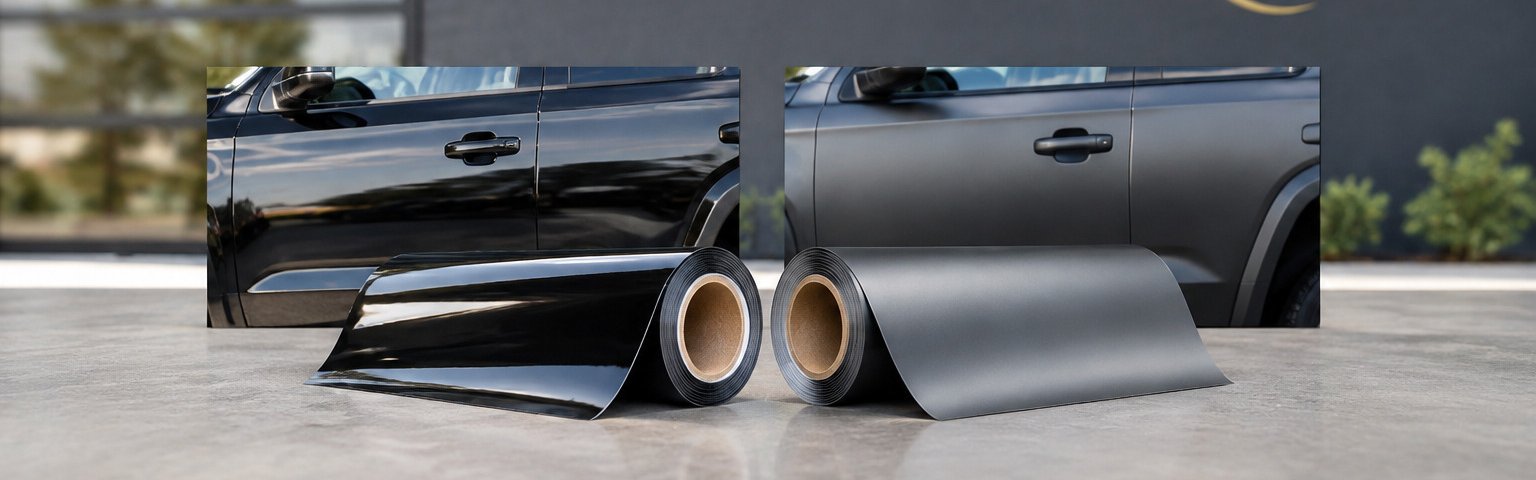
3M's 1080 series is known for color consistency, durability, and ease of installation; Avery Dennison's MPI series competes directly on quality and durability. Both are professional-grade and hold up to weather, UV exposure, and fleet wear.
The practical difference is minimal, both perform similarly when installed correctly.
Cheaper alternatives typically show their weakness within 18-36 months: fading, peeling at edges, or adhesion failure.
Fleet Wrap Design: Creating Brand Consistency Across Vehicles
Your fleet wrap design is mobile advertising that represents your brand every time a vehicle hits the road. The design process separates providers that understand fleet branding from those that just apply graphics.
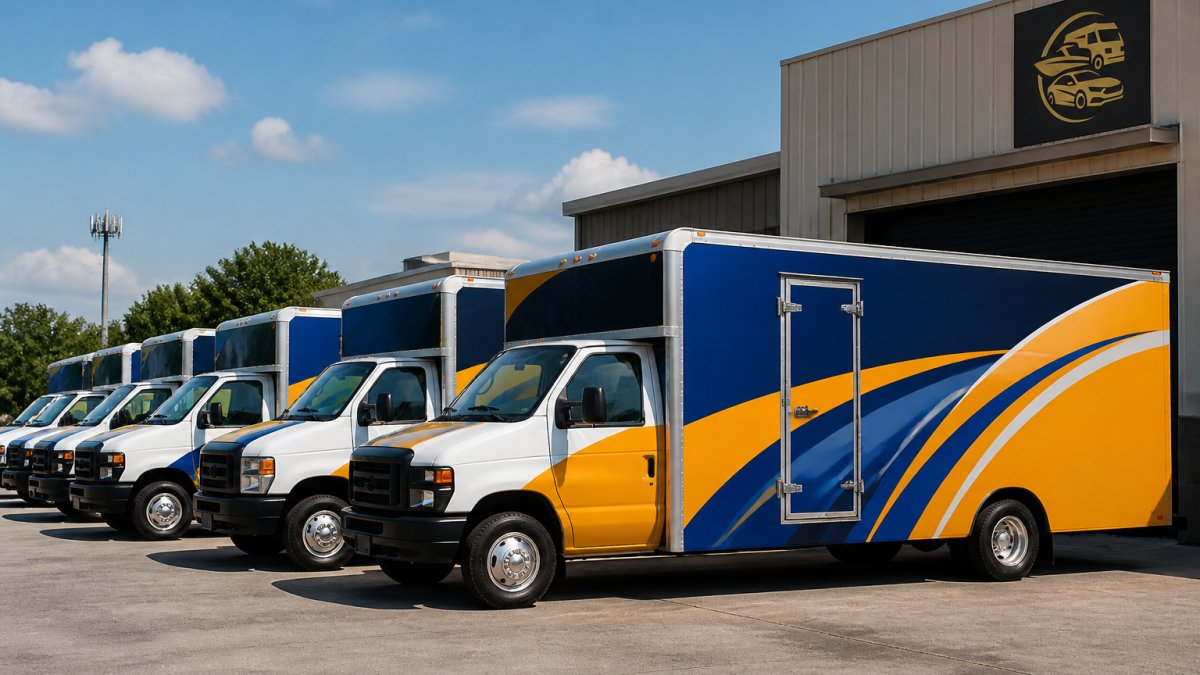
A strong fleet wrap design starts with clarity about what you want to communicate: a logo recognizable at highway speeds, a color palette matching your brand guidelines, and contact information (phone, website) legible and positioned consistently across vehicles.
Design consistency across multiple vehicles requires detailed specs: exact logo placement, text sizing, color specifications, and custom elements, documented and applied to every vehicle in your fleet.
Vendor Selection Scorecard for Fleet Wraps
Most buying guides tell you to 'evaluate providers on quality and service.' That's not a process. This section turns vendor selection into a weighted scorecard you can run against any provider, including us, plus the procurement steps that keep the comparison honest.
How to weight the criteria
The weights below reflect what tends to matter most on multi-vehicle projects. Adjust them to your operation: a 5-vehicle local fleet should weight local service higher; a 200-vehicle multi-state fleet should weight coordination and capacity higher.
| Criterion | Suggested weight | What a strong answer looks like |
|---|---|---|
| Multi-location coordination | 20% | Named installers or owned shops in your service regions; a single project manager; documented scheduling and QC process |
| Production capacity and turnaround | 15% | Stated weekly vehicle capacity; committed install windows; a plan for surge volume |
| Material specification | 15% | Named film brand and series (e.g., 3M 1080, Avery Dennison MPI), laminate specified, consistent across the fleet |
| Design consistency system | 15% | Per-vehicle-type templates, locked color and placement specs, pre- and post-install QC checks |
| Warranty and lifecycle support | 15% | Written warranty covering material and labor; defined repair and removal terms; end-of-lease guidance |
| Pricing transparency | 10% | Itemized quote with square footage, film, labor hours, removal, and mobilization |
| Verifiable fleet references | 10% | Case examples with fleet size, vehicle types, rollout timeline, and a contactable reference |
The scoring rubric
Score each provider 1-5 per criterion, multiply by the weight, and total. Anchor the scores so different evaluators land in the same place:
- 1, No answer, or a verbal claim with nothing behind it.
- 2, Partial answer; process exists but is undocumented.
- 3, Documented process, no fleet-scale evidence.
- 4, Documented process plus fleet references you can verify.
- 5, Documented process, verifiable fleet references, and a written service commitment (install windows, rework turnaround, warranty terms).
The procurement sequence
Run the scorecard inside a process, not in isolation:
- Issue a written requirements brief. Fleet size, vehicle types, service regions, target rollout window, design assets, and end-of-lease dates. Providers who can't respond to specifics self-select out.
- Request itemized quotes using the five cost lines from the pricing section. Reject bundled estimates.
- Ask for two fleet references of similar size and geography, and actually call them. Ask about rework, missed install dates, and how the provider handled a problem.
- Score independently. Have two people score each provider before comparing notes; this surfaces criteria one evaluator overlooked.
- Negotiate the service commitment, not just the price. Install windows, rework turnaround, warranty response time, and removal terms belong in writing.
- Pilot before you commit the fleet. Wrap two or three vehicles first, inspect them after 30 days, then scale. A pilot is the cheapest quality-control tool available.
Where providers typically separate
In practice, most providers clear the material and design criteria, premium film and good artwork are table stakes. The separation happens on coordination, capacity, and lifecycle terms: whether they can hold an install schedule across regions, whether they'll commit to a rework turnaround, and whether removal and warranty are priced and documented upfront. Weight your scoring toward those criteria and the decision usually makes itself.
Pearl Wrapz provides comprehensive visual branding solutions, specializing in custom vehicle wraps, wall murals, storefront window graphics, and floor decals.
Conclusion
Finding the right Car Wrap City alternative for fleets comes down to choosing a partner who understands fleet-scale operations, maintains design consistency, and prices transparently.
Pearl Wrapz delivers exactly this for fleets across North Texas and southern Oklahoma. We handle multi-vehicle projects with coordinated installation, maintain design consistency across your entire fleet, and provide clear pricing with material specifications and warranty coverage included.
Ready to transform your fleet into a mobile branding powerhouse? Get a Quote from Pearl Wrapz and see how professional fleet wraps can make your business impossible to overlook.
Frequently Asked Questions
What makes one fleet vehicle wrap company better than another?
The best fleet vehicle wrap companies offer multi-location installation coordination, transparent pricing, proven quality control, and warranty support. Compare their experience with commercial fleets your size, their ability to maintain design consistency across multiple vehicles, material durability (3M or Avery Dennison vinyl), and whether they handle installation in-house.
Is 3M or Avery Dennison vinyl better for commercial vehicle wraps?
Both 3M and Avery Dennison produce high-quality vinyl for fleet wraps, but they differ slightly. 3M excels in color retention and weather resistance, making it ideal for vehicles in direct sunlight. Avery Dennison offers excellent conformability on curved surfaces and strong adhesion on textured paint. For fleet consistency, choose one brand and stick with it across all vehicles.
How do you keep design consistent across a fleet wrap project?
Fleet wrap design consistency requires a detailed brand guideline document covering logo placement, color specifications, font sizes, and spacing.
What should I ask about warranty and removal when choosing a fleet wrap provider?
Ask about material warranty (typically 3-7 years depending on vinyl quality), installation warranty (coverage for peeling, adhesion failure), and removal services. Clarify whether removal is included at lease-end or costs extra. Request details on their process for addressing fading, damage, or partial wrap failure mid-lifecycle.