 Ultimate guide
Is Vehicle Wrap Advertising Worth It for Businesses?
Quick Summary
Vehicle wrap advertising is worth it when the vehicle is driven through the areas you serve, because it delivers repeated exposure for a single upfront fee. A wrap on a vehicle that sits parked most of the day delivers little. Its value depends on route quality, design readability, and measurement you set up before installation.
- A wrap's cost is one upfront production and installation fee, not a recurring media bill.
- Plan for three to five years of wrap life, since heavy highway driving can shorten readable life.
- Map your actual weekly routes and discount for viewing angle, speed and parked time.
- Use a dedicated phone number, unique URL or QR code to track calls and visits from the wrap.
- Keep designs simple, with a large business name, one short message and high contrast.
Table of Contents
- What Vehicle Wrap Advertising Actually Delivers
- Reach, Impressions and Repeat Exposure: What the Numbers Mean
- Vehicle Wrap Advertising ROI: How to Calculate It With Honest Assumptions
- Vehicle Wrap Advertising Cost: Comparing Upfront and Ongoing Spend
- How Long a Vehicle Wrap Lasts and What Affects Its Lifespan
- Vehicle Wrap Design Best Practices for Readability at Speed
- Limitations, Measurement and Planning Your Next Step With Pearl Wrapz
- Frequently Asked Questions
What Vehicle Wrap Advertising Actually Delivers
Last Updated: November 18, 2026
Vehicle wrap advertising effectiveness for businesses comes down to one simple idea: a vehicle that is already on the road can carry your message to people who never asked to see it.
The most-cited figure in this space is that a single wrapped vehicle can generate approximately 30,000 to 80,000 impressions per day, according to Gitnux's 2026 vehicle wrap marketing analysis (Gitnux, Vehicle Wrap Marketing Statistics (2026)).
Vehicle wraps deliver three things that most paid channels do not. They put your name in front of people in the places they already travel, they repeat the message every time the vehicle is seen, and they cost one upfront production and installation fee rather than a recurring media bill. Many businesses find that the repetition matters as much as the reach, because a logo seen on the same route several times a week builds familiarity in a way a single ad impression does not.
The honest answer to whether this is worth it depends on how you deploy it. A wrap on a vehicle that sits in a lot all day delivers little.
Reach, Impressions and Repeat Exposure: What the Numbers Mean
Impressions are the number of times a vehicle could be seen, and reach is the number of distinct people who might see it.
Repeat exposure is where wraps tend to outperform one-off placements. The same local commuters encounter the same vehicle daily, which can build recognition over weeks.
When you read any impression figure, ask how it was produced. Traffic counts, route assumptions and viewing angles all change the result.
Vehicle Wrap Advertising ROI: How to Calculate It With Honest Assumptions
Most wrap ROI claims fail for one reason: they multiply a headline impression figure by a revenue assumption and present the result as a forecast. A defensible estimate works the other way around. You start with costs you can verify, apply exposure assumptions you can explain, and then test the output against what you can actually track. The model below is reusable across vehicle types and campaign lengths.
Step 1: Establish the true total cost
Your ROI denominator is not just the film and installation. It should include design time, any vehicle downtime during installation, removal cost at end of life, and the incremental cost of insurance or permitting if your fleet requires it. A common pattern is for businesses to quote only the installation invoice and then be surprised when the three-year cost is 15 to 25 percent higher.
Step 2: Set a lifespan you can defend
Use the film manufacturer's warranty period as a ceiling, not a promise. A wrap driven daily on highways in strong sun will often reach the end of its readable life before the warranty expires. Most practitioners plan on three to five years for a full wrap and shorter for partial coverage exposed to heavy abrasion. Divide total cost by expected years to get an annualized cost, which is the number you compare against paid media.
Step 3: Estimate local daily views from your actual routes
This is where most estimates go wrong. A national average impression figure assumes dense traffic and constant driving. Your vehicle may spend six hours a day parked at a job site and two hours on suburban roads. Build your own estimate:
- Map the routes your vehicles actually drive in a typical week.
- Use public traffic-volume data for those road segments where available.
- Discount for viewing angle, speed, and the share of the route where the vehicle is parked or obscured.
A conservative planner will land well below published headline figures, and that is the point. An estimate you can defend is more useful than one you cannot.
Step 4: Apply a conversion share you can explain
There is no universal conversion rate for vehicle wraps, and any source that supplies one should be treated with suspicion. Instead, work backward from your business. If you need 20 new customers a year to justify the annualized cost, and your close rate on inbound leads is one in five, you need roughly 100 qualified leads. Then ask what share of local viewers would need to become leads for that to happen.
Step 5: Compare against the channel you would otherwise fund
Set the annualized wrap cost against the annual spend on the paid channel it would replace, using the same time window. A wrap has little recurring cost after installation, while paid media stops producing exposure when spending stops. That structural difference, not a single impression figure, is the strongest argument for a wrap in a multi-year budget.
Step 6: Track what you can and revise
Attribution for out-of-home advertising is imperfect, so plan for it before the wrap goes on the road. Use a dedicated phone number or unique URL on the vehicle, a QR code that leads to a campaign-specific landing page, and a simple question at intake ("How did you hear about us?").
Watch out: treating an impression estimate as a guaranteed outcome is the most common planning error. Build the model so that a 50 percent miss on views still leaves the campaign defensible.
Vehicle Wrap Advertising Cost: Comparing Upfront and Ongoing Spend
Pricing depends on quantity, vehicle size, coverage and design scope. You can also review the vehicle wrap services Pearl Wrapz offers on its website: browse our vehicle wraps and fleet graphics service.
The fair comparison is an upfront cost spread across the wrap's useful life against an ongoing monthly spend on digital ads or print.
Compare channel costs directly before you commit budget. Our breakdown of vehicle wrap versus Facebook ads for local business cost shows how upfront wrap spend and ongoing ad spend compare over time.
The table below sets out the main cost considerations for a vehicle wrap compared with ongoing paid media, as described in the article.
| Cost factor | Vehicle wrap | Ongoing paid media |
|---|---|---|
| Upfront spend | One production and installation fee | No large upfront fee |
| Recurring cost | Little recurring cost after installation | Ongoing monthly spend |
| Exposure after spending stops | Continues while the wrap is on the road | Stops when spending stops |
| Best comparison window | Same window, such as three years | Same window, such as three years |
How Long a Vehicle Wrap Lasts and What Affects Its Lifespan
Wrap lifespan depends on film quality, installation, climate and how the vehicle is used and cleaned. Mileage matters as well, since high-traffic routes expose the film to more abrasion, debris and washing.
Ask any installer for the manufacturer's warranty terms on the film and the labor, and confirm what the warranty excludes. Proper surface prep, correct installation and regular hand washing with approved products all extend life.
Vehicle Wrap Design Best Practices for Readability at Speed
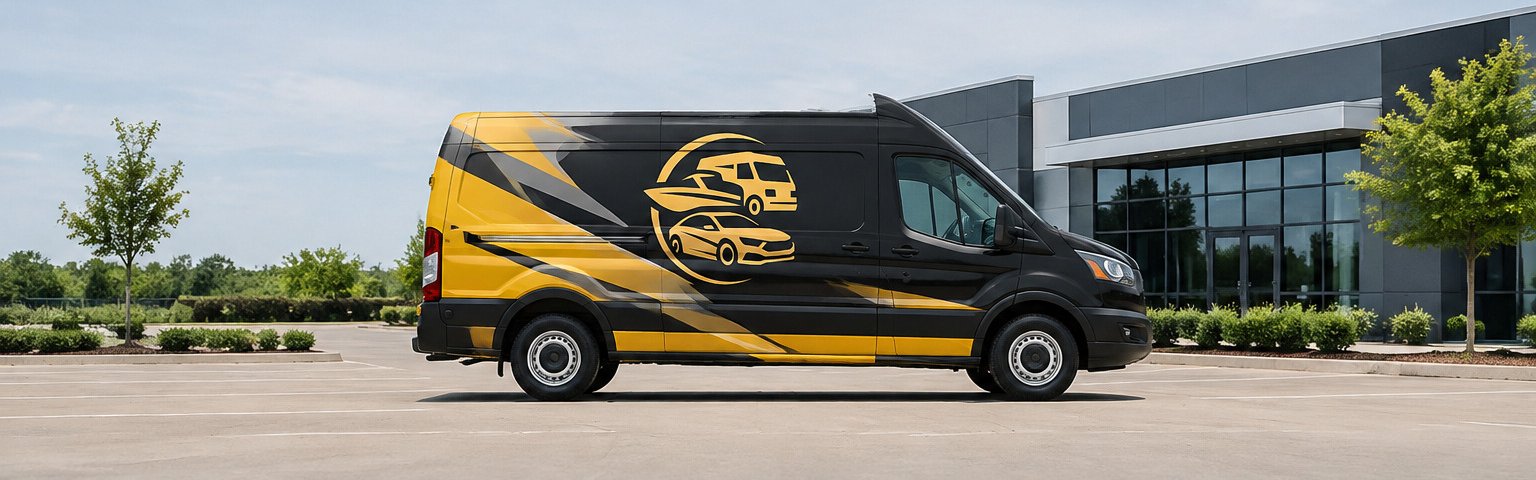
Most people who see a wrap see it at highway speed or from a parked car across a lot. A design that reads well in a studio can become a blur at 45 miles per hour.
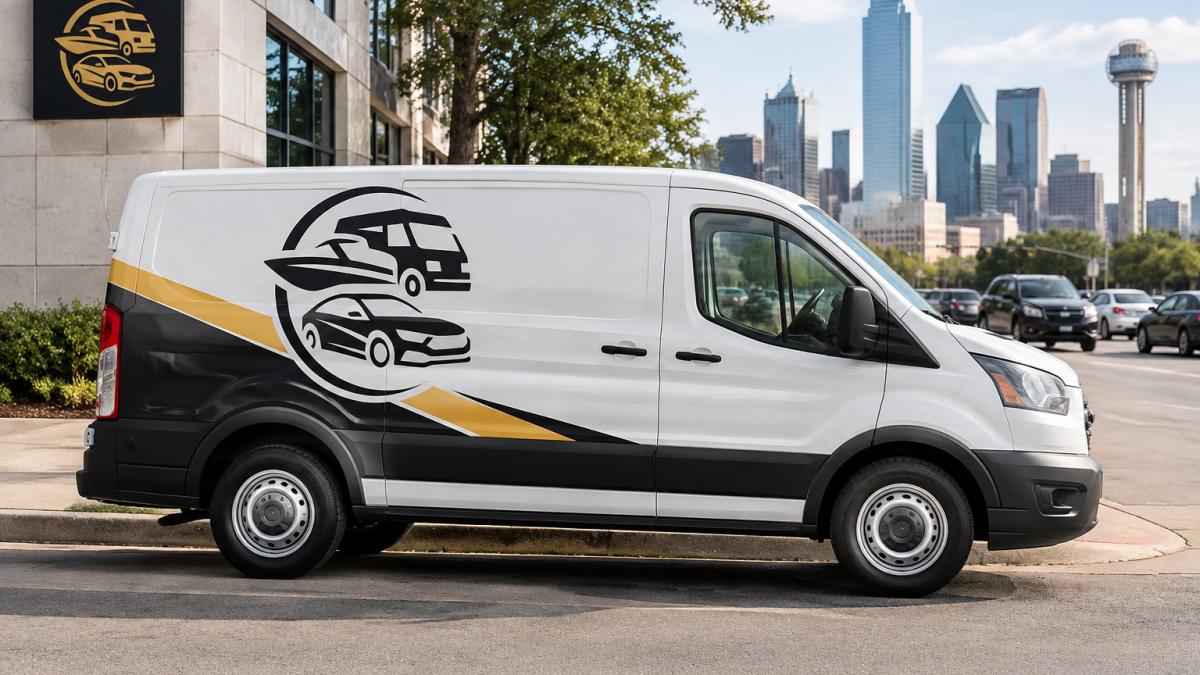
Keep the business name and one short message, such as the service you offer, and place the logo where it is visible from the side and rear.
Limitations, Measurement and Planning Your Next Step With Pearl Wrapz
Vehicle wraps are not a universal answer, and the businesses that get the most from them are the ones that plan around the limitations rather than ignore them. This section covers where wraps underperform, how to measure results honestly, and a step-by-step framework for deciding coverage and evaluating performance.
Where wraps underperform
A wrap on a vehicle that sits in a lot all day delivers little. A wrap on a vehicle driven far outside the area you serve reaches people who will never become customers.
Design and maintenance also undercut results. A crowded design that cannot be read at speed, a wrap installed over poor surface prep, or a vehicle that goes through brush car washes will all reduce the effective life and reach of the campaign.
Audience and route quality
Impressions vary enormously by route, traffic density, parking patterns, vehicle type, and local audience fit. A box truck on a commercial corridor reaches a different audience than a sedan on residential streets. Before you commit, estimate exposure for your own vehicles: map typical weekly routes, note where vehicles park and for how long, and discount for viewing angle and speed.
Measurement and attribution
Plan measurement before the wrap is installed. Practical methods include:
- A dedicated phone number printed on the vehicle and tracked separately.
- A unique URL or QR code leading to a campaign-specific landing page.
- Promo codes tied to the wrap campaign.
Distinguish awareness from direct response. A wrap may contribute to a sale that is attributed to search, and that contribution is real but hard to isolate. Credit the wrap only for what you can confirm, and treat the rest as brand investment.
Evidence quality and source context
Many of the recall and impression statistics repeated in wrap marketing trace back to a small number of studies, and their methodologies are not always published. When you see a headline figure, ask who produced it, when, and with what methodology. Independent research and vendor claims are not the same thing, and a figure without a published method should be treated as a ceiling to test, not a forecast.
A step-by-step planning framework
- Define the objective: awareness, lead generation, or recruitment.
- Map the service area and the routes your vehicles actually drive.
- Choose coverage: full wrap for maximum impact, partial wrap for budget, decals for a low-cost test.
- Select vehicles based on utilization and route fit, not just size.
- Set a realistic ROI assumption using the model in the previous section.
- Install measurement mechanisms before the wrap goes on the road.
- Review performance at 90 days and adjust routes, design, or coverage.
Pearl Wrapz handles the work from concept through professional installation for vehicle and commercial surface graphics. Get a quote from Pearl Wrapz to see what a wrap would cost for your fleet and how it fits your routes.
Get a Quote from Pearl Wrapz
Start with the routes your vehicles already drive and the customers you want to reach. Pearl Wrapz designs and installs wraps tailored to that plan, from concept through professional installation.
Frequently Asked Questions
Is vehicle wrap advertising effective for businesses?
It can be, but effectiveness depends on how many miles the vehicles drive, where they drive, and how clearly the design reads. Published impression figures for wrapped vehicles vary, and many do not disclose their methodology, so treat them as estimates rather than guarantees. The practical way to judge vehicle wrap advertising is to track route coverage, count how often your vehicles are seen in your service area, and compare inbound calls or visits before and after the wrap goes on.
How long does a commercial vehicle wrap last?
Vehicle wrap lifespan depends on the vinyl quality, the installation, the climate and how much the vehicle is driven. Lower-grade vinyl tends to fade or peel sooner, while higher-grade materials installed correctly can hold up for several years. Ask any installer for the film's rated lifespan and what their warranty covers, and keep the wrap washed and out of harsh conditions where possible.
How do businesses measure the ROI of vehicle wraps?
Start with a simple formula: estimated monthly exposure multiplied by your conversion assumptions, compared against the total cost of the wrap spread over its useful life. Track leads with a dedicated phone number, a unique web address or a QR code on the vehicle, and ask new customers how they heard about you. Because exposure is hard to measure precisely, use conservative assumptions and update them as you collect real data.
What types of businesses benefit most from vehicle wraps?
Businesses whose vehicles drive frequently through a defined local area tend to get the most value, such as logistics companies, contractors, service technicians and delivery fleets. Fleets with a consistent route or service radius can repeat the same audience exposure over time. Businesses that mostly serve customers at a fixed location may get more value from storefront window graphics or interior branding instead.