 How-to
Commercial Fleet Branding Services: A 2026 Guide
Last Updated: October 23, 2026
Quick Summary
Commercial fleet branding services north in Texas transform your vehicles into mobile marketing assets that deliver up to 80,000 daily impressions per vehicle and generate 97% brand recall compared to digital advertising. A single wrapped vehicle generates continuous brand exposure while driving, with cost per impression often under $2 compared to $8-$15 for digital campaigns.
- A wrapped vehicle generates up to 80,000 daily impressions per vehicle according to 2026 market analysis.
- Vehicle wraps achieve 97% brand recall compared to digital advertising and can boost name recognition by up to 15 times.
- Professional-grade vinyl wraps typically last 5-7 years with proper maintenance and UV-resistant materials.
- Full wraps cost $2,500-$6,000 per vehicle with zero recurring costs over 5-7 years versus $60,000-$120,000 in digital ad spend.
- Window wraps must maintain at least 70% light transmission on windshields and front side windows per FMCSA regulations.
Table of Contents
- What Commercial Fleet Branding Actually Delivers
- Fleet Wrap Design: Creating Graphics That Work Harder
- Fleet Decals: Flexibility and Cost Considerations
- Vehicle Wrap Installation: What Professional Execution Looks Like
- Vehicle Wrap Maintenance and Longevity
- Calculating ROI: Fleet Branding vs. Digital Advertising
- Legal and Compliance Considerations for Commercial Wraps
- Getting Started: From Quote to Installation
- Frequently Asked Questions
What Commercial Fleet Branding Actually Delivers
Commercial fleet branding services north in Texas have become essential for businesses that want their vehicles to work as mobile marketing assets. A vehicle wrap can deliver up to 80,000 daily impressions per vehicle, according to research from Gitnux's 2026 market analysis, meaning your fleet generates significant brand exposure every single day.
Here's what makes fleet branding different from other marketing channels: it's passive, consistent, and impossible to ignore. Vehicle wraps can generate up to 97% brand recall compared to digital advertising, according to Gitnux's brand memory research.
Fleet vehicle advertising can reach 95% of the population and boost name recognition by up to 15 times. Whether you run five trucks or 20, commercial fleet branding services north in Texas transform your vehicles into revenue-generating marketing tools.
Fleet Wrap Design: Creating Graphics That Work Harder
The design phase is where most fleet branding projects succeed or fail. A poorly designed wrap might look good in a parking lot but become unreadable at highway speeds.
Effective fleet wrap design starts with your audience's vantage point. Drivers have limited time to absorb information, so prioritize your company name, logo, and primary message.
Design Best Practices for Readability at Speed
Readability at speed requires high-contrast colors, bold sans-serif typefaces, and minimal text. Learn more about how to make vehicle graphics readable at highway speeds. Our rule: if someone can't read it from 50 feet away while driving, it's too small.
Design must account for the vehicle's curves: a flat mockup can distort around door panels or cargo box corners, so professional designers plan for it.
Full Wraps vs. Partial Wraps and Fleet Decals
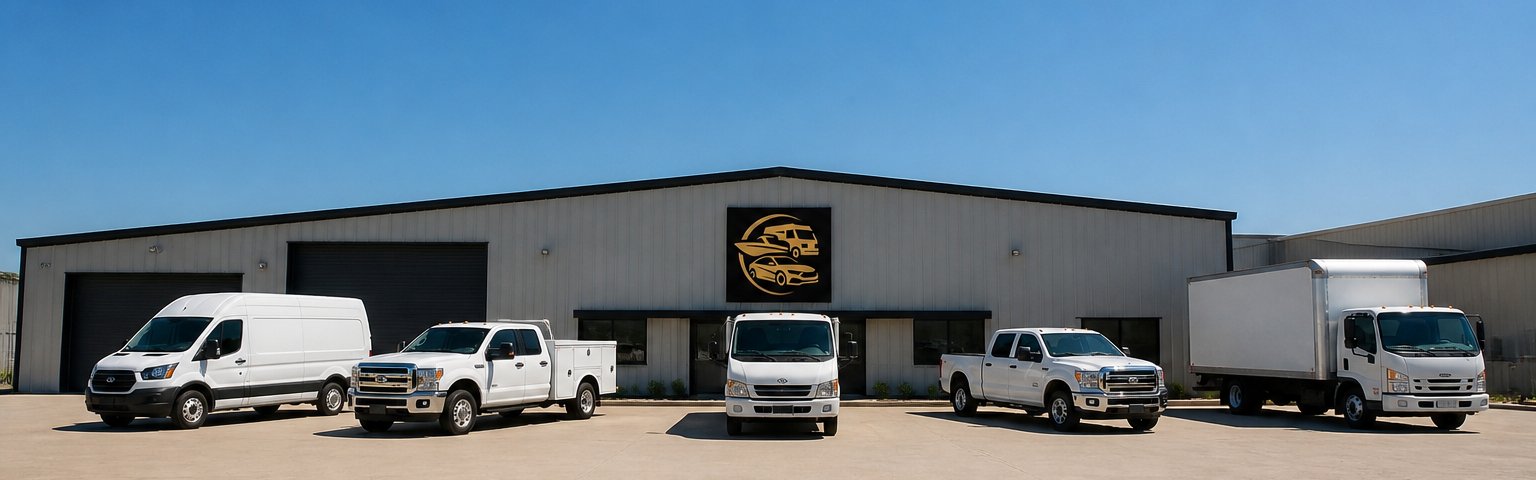
Full wraps cover the entire exterior for maximum impact and consistent fleet branding. Partial wraps cover specific sections, typically sides and back, costing less while still delivering strong visibility. Fleet decals offer the most flexibility and lowest cost entry point.
The choice depends on budget, fleet size, and how often you update branding. Full wraps suit companies wanting fleet-wide uniformity; partial wraps are a practical middle ground; decals work well for adding messages or updating graphics without replacing the entire wrap.
Fleet Decals: Flexibility and Cost Considerations
Fleet decals offer flexibility full wraps don't: apply them to specific vehicles, update them seasonally, or test messaging without a full-wrap commitment. They're ideal for adding phone numbers, websites, or service-specific messaging to existing vehicles.
Decals install faster, mean less downtime, and cost less per vehicle, making them accessible for smaller fleets.
Durability varies depending on the vinyl quality and environmental conditions. The research from NAFA Fleet Management Association shows that fleets keeping vehicles in service longer than originally planned benefit from durable graphics that maintain appearance over extended timelines.
Vehicle Wrap Installation: What Professional Execution Looks Like
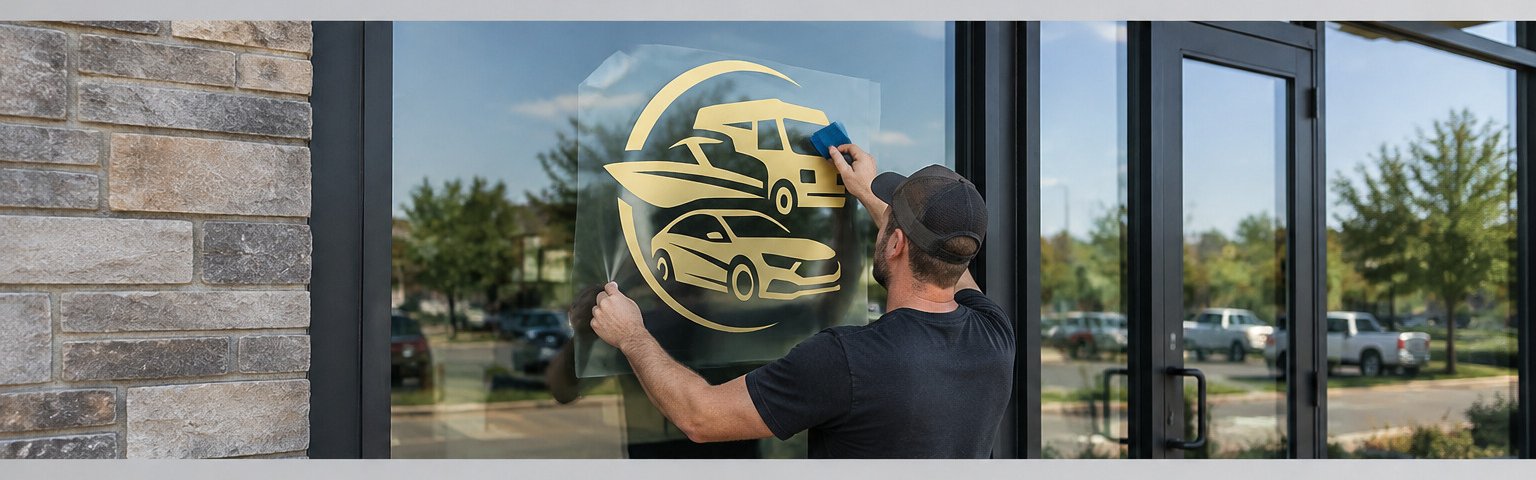
Professional installation is where design becomes reality. The wrong approach causes bubbles, wrinkles, or premature peeling, so installers follow a specific process: surface preparation, careful application, precision trimming, and quality inspection.
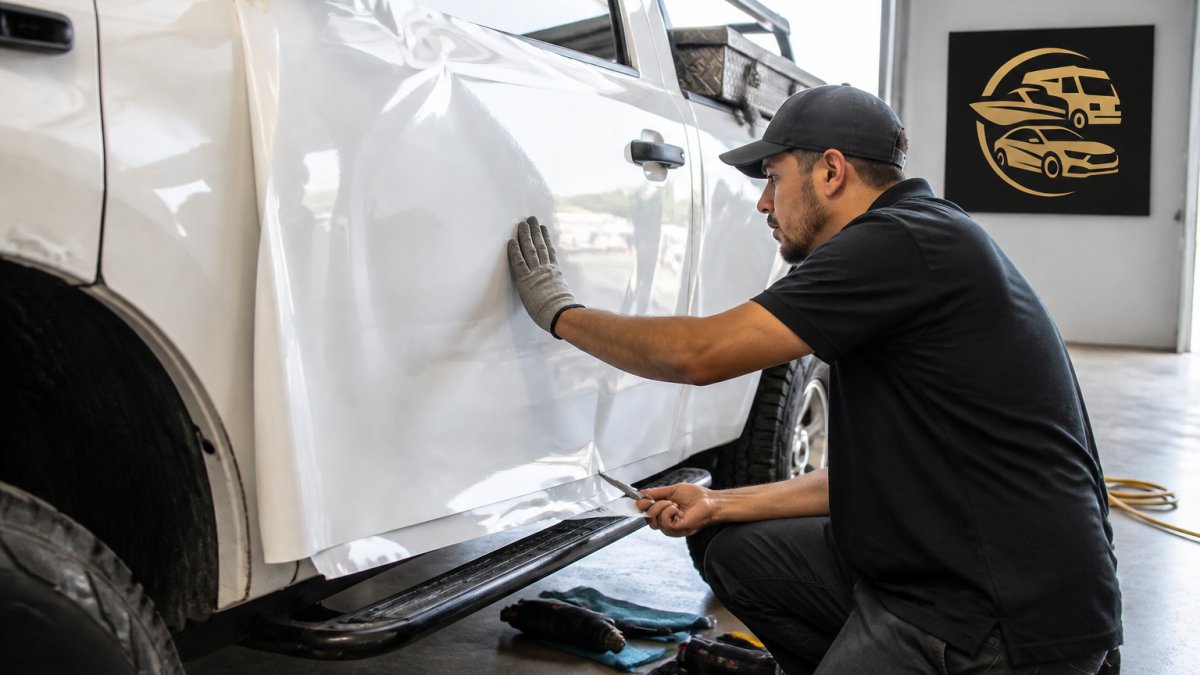
Surface preparation is critical: the vehicle must be thoroughly cleaned and dried before vinyl touches it, since dust, dirt, or moisture causes adhesion problems.
Installation Timeline and Service Area Coverage
Timelines depend on complexity and vehicle size: a partial wrap takes 4-8 hours, a full wrap on a large commercial truck 12-16 hours. Fleet vehicles are usually staggered to minimize downtime.
We work throughout North Texas and southern Oklahoma, so we understand this region's climate. Temperature and humidity affect how vinyl applies and cures, and installers account for seasonal variations when scheduling.
Vehicle Wrap Maintenance and Longevity
Wrap longevity depends on maintenance, environment, and vinyl quality. Professional-grade vinyl typically lasts 5-7 years. UV exposure is the primary factor, so vehicles parked outdoors year-round fade faster than those stored under cover.
Regular washing extends wrap life: use gentle soap and soft brushes, avoid high-pressure washers that force water under edges, and skip harsh chemicals and wax, which can damage vinyl. For detailed guidance, explore how long vehicle wraps actually last and care habits that protect them.
Temperature swings matter too: extreme heat weakens adhesive and extreme cold makes vinyl brittle. North Texas sees significant seasonal swings, making proper installation and maintenance even more important.
Calculating ROI: Fleet Branding vs. Digital Advertising
Most fleet branding pages quote a price and stop. A defensible ROI case requires a cost-per-impression framework you can run on your own fleet. Here is the model we use with fleet managers.
Step 1: Establish Your Cost Basis
Start with the all-in cost per vehicle: design, print, laminate, installation, and any removal of existing graphics. Pricing for commercial wraps depends on vinyl grade, laminate, and design complexity. Add removal of old vinyl if applicable, which often runs a few hundred dollars per vehicle. Divide total cost by the expected service life of the wrap, typically 5 to 7 years for cast vinyl with a quality laminate.
Step 2: Estimate Impressions Conservatively
The often-cited figure of daily impressions per vehicle comes from outdoor advertising research and assumes high-traffic routes. For a defensible internal model, use a conservative floor: estimate daily miles driven, multiply by a conservative impressions-per-mile factor for your route density, and multiply by operating days per year. A service van logging 60 miles a day on suburban commercial corridors will generate far fewer impressions than a box truck on an interstate loop, so model each vehicle class separately rather than applying one fleet-wide number.
Step 3: Calculate Cost Per Impression
Divide total cost per vehicle by total estimated impressions over the wrap's life. A wrap generating a conservative number of impressions per day over a period of time yields a significant number of impressions. Compare that to your digital cost per thousand impressions (CPM). If your digital campaigns run at a certain CPM, the wrap's effective CPM is a fraction of that, and it does not pause when the budget does.
Step 4: Compare Against Digital on a Five-Year Horizon
| Metric | Fleet Wrap (per vehicle) | Digital Ads (monthly) |
|---|---|---|
| Upfront cost | $2,500-$6,000 | $0 |
| Recurring cost | $0 after install | $1,000-$2,000 |
| Service life | 5-7 years | Continuous spend required |
| Impressions | Continuous while driving | Only while funded |
| 5-year total cost | $2,500-$6,000 | $60,000-$120,000 |
| Cost per 1,000 impressions | Often under $2 | $8-$15 typical |
The comparison is not that wraps beat digital in every category. Digital wins on targeting, measurement, and creative flexibility. Wraps win on cost per impression, persistence, and local credibility. The strongest programs use both: wraps for always-on local awareness, digital for retargeting and lead capture.
Step 5: Account for Residual Value
A well-maintained wrap can be removed before trade-in or lease return, and quality cast vinyl with a laminate typically leaves no adhesive residue on factory paint when removed by a professional. That means the wrap cost is amortized over the vehicle's service life without reducing resale value, which is a factor digital spend cannot match.
Legal and Compliance Considerations for Commercial Wraps
Most fleet branding pages skip compliance entirely, which is a mistake. A wrap that violates window-tint or signage rules can cost you a citation, force a reprint, or complicate an insurance claim. The rules that matter fall into four buckets: window visibility, commercial signage permits, vehicle registration and weight class, and insurance disclosure.
Window Visibility and Tint Rules
Federal motor carrier safety regulations set minimum window transparency for commercial vehicles. The Federal Motor Carrier Safety Administration (FMCSA) requires that windshields and front side windows on commercial motor vehicles allow at least 70% light transmission, and that windows be free of decals or stickers that obstruct the driver's view. Many states layer their own tint and obstruction rules on top.
Commercial Signage Permits
Vehicle wraps are generally treated as vehicle graphics, not stationary signage, so most municipalities do not require a sign permit for a wrapped fleet vehicle. The exception is when a vehicle is parked permanently and functions as a billboard, or when a business operates under a conditional-use permit that restricts on-site advertising. Before you wrap, confirm two things with your local planning or code enforcement office: whether your business license or zoning approval limits vehicle advertising, and whether any HOA or lease agreement restricts commercial graphics on vehicles parked at your facility.
Registration, Weight Class, and DOT Markings
If your fleet includes vehicles over 10,001 pounds gross vehicle weight rating (GVWR) or vehicles operating in interstate commerce, the FMCSA requires USDOT numbers displayed on both sides of the power unit. A wrap design should reserve space for the USDOT number and the legal company name so you do not have to cut into fresh vinyl later.
Insurance Disclosure
Notify your commercial auto insurer before installation. Most carriers treat a vinyl wrap as a cosmetic modification that does not change the premium, but some policies require disclosure of vehicle modifications, and an undisclosed wrap can complicate a total-loss claim. Ask your agent for written confirmation that the wrap is noted on the policy. Keep the installer's invoice and the vinyl manufacturer's warranty documentation with your vehicle files.
A Pre-Installation Compliance Checklist
- Confirm window coverage leaves at least 70% light transmission on the windshield and front side windows.
- Reserve space for USDOT number and legal company name if the vehicle exceeds 10,001 pounds GVWR or crosses state lines.
- Check local zoning, business license, HOA, and lease terms for vehicle advertising restrictions.
Getting Started: From Quote to Installation
The process begins with your goals: branding an entire fleet or testing one vehicle, full coverage or targeted graphics.
Request a quote by telling us about your vehicle, branding goals, and timeline.
You can request a quote and discuss your specific fleet project directly.
Design typically takes 1-2 weeks, with installation following final approval. For multi-vehicle fleets, we coordinate scheduling to keep operations running smoothly.
Commercial fleet branding services north in Texas transform how your business is perceived on the road.
Frequently Asked Questions
How much does commercial fleet branding typically cost?
Fleet wrap pricing depends on vehicle size, wrap type (full or partial), design complexity, and quantity. A single commercial vehicle wrap may cost less than a multi-vehicle fleet project, which often qualifies for volume pricing. Contact Pearl Wrapz for a custom quote based on your fleet size and branding specifications.
How long will a commercial vehicle wrap last?
High-quality vinyl wraps typically last 5-7 years under normal driving conditions, though longevity depends on climate, UV exposure, and maintenance. Regular cleaning and avoiding harsh chemicals extend wrap life. Fleet wraps made with durable vinyl materials resist fading and peeling better than budget alternatives. Proper maintenance, including monthly washing, helps maximize your wrap's lifespan and visual impact.
Will a vehicle wrap damage my commercial fleet's paint?
No. Professional vehicle wrap installation does not damage factory paint when applied and removed correctly. The vinyl adheres to the paint surface without requiring drilling or permanent attachment. Removal by trained installers leaves no residue or marks. This makes wraps ideal for leased commercial vehicles or fleets you plan to resell, since you can remove the graphics without affecting the underlying paint condition.
How many impressions can a commercial fleet vehicle generate daily?
A single wrapped commercial vehicle can deliver up to 80,000 daily impressions, depending on route and traffic patterns. Fleet vehicle advertising reaches approximately 95% of the population over time. Combined with brand recall rates as high as 97%, fleet graphics deliver significantly higher brand awareness than static signage or occasional digital ads, making them one of the most cost-effective mobile marketing assets for commercial businesses.