 How-to
7 Storefront Window Branding Tax Deductions You Can Claim
Last Updated: November 10, 2026
Quick Summary
Storefront window branding is generally deductible as a business advertising expense because the IRS treats advertising as an ordinary and necessary cost of running a business. Removable window decals and films usually qualify for a current deduction, while permanent, structural signage may need to be depreciated instead.
- The commercial signage deduction can cover design fees, printing, installation labor, removal of old graphics, and permits.
- Removable graphics that do not damage the glass or structure are typically treated as advertising and deducted.
- Section 179 or bonus depreciation may speed up the write-off for permanent, structural signage.
- Keep an itemized invoice, proof of payment, photos, and a business-purpose note for every window branding project.
- If you lease and the landlord pays or reimburses you, the landlord generally claims the deduction.
Table of Contents
- Why Storefront Window Branding Qualifies as a Business Advertising Expense Deduction
- The Commercial Signage Tax Deduction: What the IRS Actually Allows
- When the Section 179 Deduction for Business Equipment Applies to Graphics
- Storefront Window Graphics Cost and How It Shapes Your Deduction Strategy
- Documenting Your Window Branding Deduction: A Recordkeeping Checklist
- Leased Storefronts and Landlord Reimbursement: Who Claims the Deduction
- What to Ignore: Common Bad Advice About Storefront Branding Taxes
- Getting Your Window Graphics Installed and Your Deduction Documented
- Frequently Asked Questions
Why Storefront Window Branding Qualifies as a Business Advertising Expense Deduction
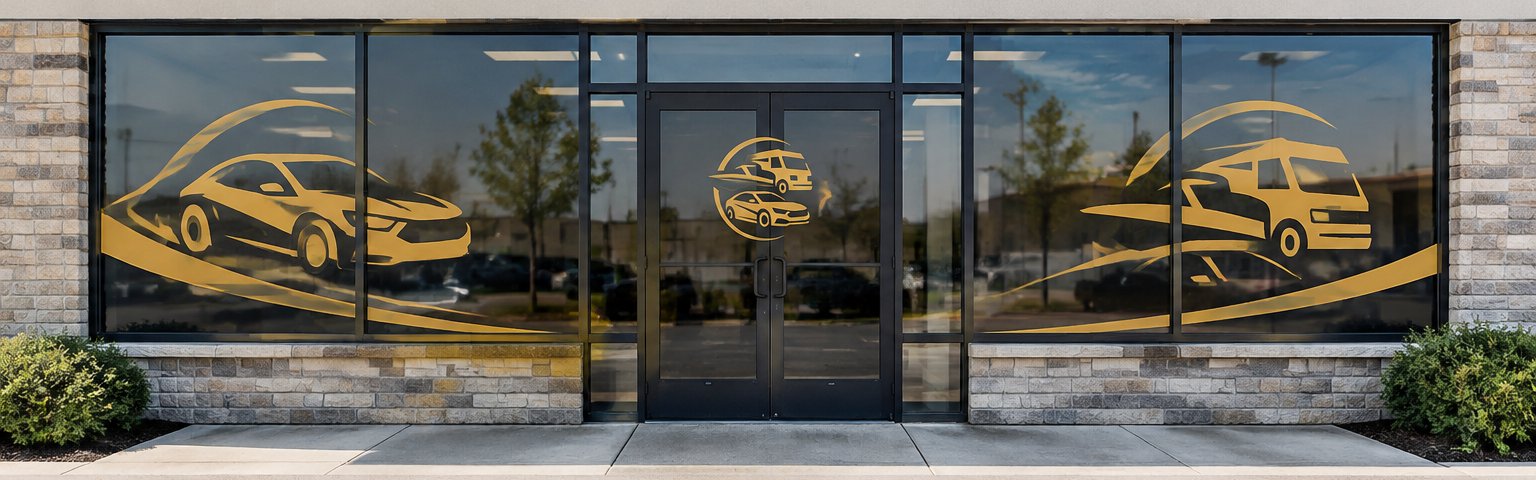
Most storefront window branding tax deductions start with one simple idea: your window graphics are advertising, and advertising is a deductible business expense.
The IRS treats advertising as an ordinary and necessary cost of running a business. A window that names your shop, shows your hours, or promotes a product does the same job as a print ad or a radio spot.
That framing matters. It decides whether you write off the full cost this year or spread it across several years through depreciation.
The Ordinary and Necessary Test in Practice
The ordinary and necessary test is the bar every business expense has to clear for deductibility. Ordinary means the cost is common and accepted in your trade. Necessary means it is helpful and appropriate for your business.
Storefront window branding passes both parts without much argument:
- Ordinary: retailers, restaurants, and service shops routinely buy window signage
- Necessary: a storefront with no name, no hours, and no offer loses walk-in customers
- Business purpose: the graphics promote your business to the public, not your home
One caveat up front. A window graphic must advertise your business, not decorate your personal space. A decal on a storefront that sells goods to the public is advertising. A decal on your garage door is not.
The Cornell University study on storefront window display transparency looked at how window displays shape whether shoppers find a store attractive and approach it. If you want to confirm your design will actually pull its weight, read how to design window graphics people can actually read.
The Commercial Signage Tax Deduction: What the IRS Actually Allows
The commercial signage tax deduction lets a business write off the cost of signs and graphics used to advertise. The IRS allows deductions for ordinary and necessary business expenses, and advertising tops that list.
So what does that cover in a window project?
- Design and artwork fees
- Printing and production of the graphics
- Installation labor
- Removal of old graphics
- Permits, where your city requires them
Here is the part most guides skip. The deduction is not automatic just because money left your account. You have to show the expense was for business advertising and that you actually paid it. Keep the invoice, the proof, and the payment record together.
Advertising Versus Depreciable Property: A Decision Tree
This is where storefront window branding tax deductions get tricky. Some window work is a current expense. Some is a capital improvement you depreciate over time. Use this decision tree to sort it out:
- Is the graphic removable without damaging the glass or structure? If yes, treat it as advertising and deduct it. If no, move to step 2.
- Does it permanently change the building or extend its life? If yes, it is a capital expenditure. If no, move to step 3.
- Is it a repair that restores the window to working order? If yes, deduct it as a repair. If no, treat it as a depreciable asset.
- Will the graphic last more than one year? Long-life, permanent signage leans toward depreciation. Short-run promotional graphics lean toward a current deduction.
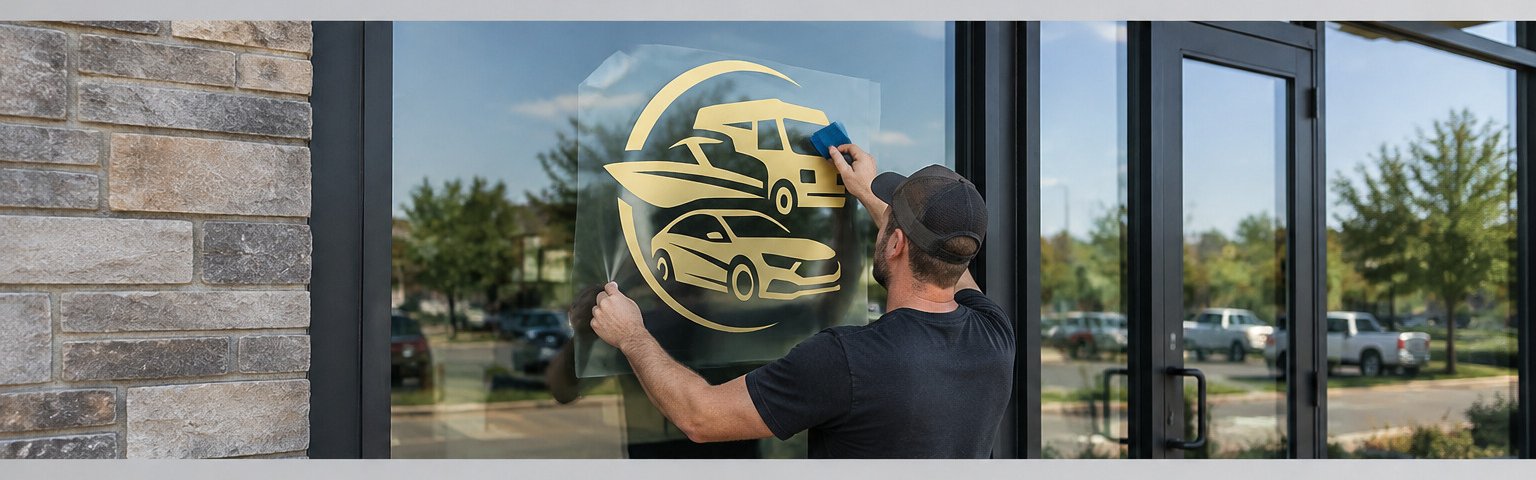
Removable window decals and films generally sit on the advertising side of the line. Permanent, structural signage is a different story.
The commercial signage deduction covers the costs of advertising your business through window graphics, provided you can prove the expense.
| Covered cost | What it includes |
|---|---|
| Design and artwork fees | Custom artwork and layout work |
| Printing and production | Production of the graphics |
| Installation labor | Labor to install the graphics |
| Removal of old graphics | Taking down previous window graphics |
| Permits | Where your city requires them |
When the Section 179 Deduction for Business Equipment Applies to Graphics
The Section 179 deduction for business equipment lets you deduct the full cost of qualifying property in the year you place it in service, instead of spreading it over several years. It is designed for tangible business assets, not pure advertising.
Where does that leave window graphics?
If your project includes equipment tied to the graphics, like illuminated sign hardware or a permanent display system, that portion may qualify. The IRS guidance on the energy-efficient commercial buildings deduction and the Department of Energy overview of the 179D deduction both describe deductions for building-system improvements.
A simple rule of thumb: removable advertising graphics are usually a current expense. Permanent, structural signage may be a depreciable asset, and Section 179 or bonus depreciation can speed up that write-off.
Storefront Window Graphics Cost and How It Shapes Your Deduction Strategy
Storefront window graphics cost depends on size, material, coverage, design complexity, and installation. That total is your cost basis, and it drives how much you can deduct.
We do not publish fixed prices, because every storefront is different. What we can tell you is what moves the number:
- Square footage: full-window coverage costs more than a single door decal
- Material: perforated film, privacy vinyl, and cut lettering carry different price points
- Design: custom artwork takes more time than a simple text layout
- Installation: large or high windows need more labor and equipment
Why does cost matter for taxes? Because the amount you spent is the amount you can potentially deduct. For a full breakdown of the factors that shape a quote, see our storefront window branding cost guide.
Documenting Your Window Branding Deduction: A Recordkeeping Checklist
Good records are what turn a storefront window branding tax deduction from a guess into a clean claim. The IRS expects you to prove the expense, the business purpose, and the payment.
Use this checklist for every window branding project:
- Signed quote or contract showing the scope of work
- Final invoice with design, production, and installation broken out line by line
- Proof of payment: bank statement, card receipt, or canceled check
- Photos of the finished graphics on the storefront, taken after installation
- Accurate window measurements tied to the project
- A short note on the business purpose, such as "promote spring sale" or "add store name and hours"
- Installation date, so you know when the cost was placed in service
- A note on whether each graphic is removable or permanently attached
Accurate measurements belong in this file because they back up the scope and cost of the job. Our guide to measuring windows for graphics walks through how to record glass dimensions and handle out-of-square panes.
Splitting a Mixed Invoice
Many window projects combine removable promotional film with permanent hardware or structural signage. Ask your installer to itemize the invoice by component, design, printing, removable film, permanent fixtures, installation labor, and removal of old graphics, rather than billing one lump sum. That breakdown is what lets your preparer assign each line to a current advertising deduction or a depreciable asset. If the invoice arrives as a single total, request a written breakdown before you file.
Preparing the Handoff Packet
Organize the file so a preparer can work from it without calling you. A common pattern is a single folder, digital or paper, containing:
- A one-page summary listing each project, the total cost, the installation date, and whether the graphics are removable or permanent
- The itemized invoice and signed contract
- Proof of payment
- Before-and-after photos
- The business-purpose note
- Any lease clause or landlord email confirming who paid for and owns the graphics
Label the folder with the tax year and the property address. If you operate multiple locations, keep a separate packet for each storefront so costs are not commingled.
Watch out: if you cannot show who paid and what was installed, a legitimate advertising deduction can be disallowed in an audit, the packet above is your protection. Hand the whole packet to your tax preparer at filing time and keep a copy with your business records.
Leased Storefronts and Landlord Reimbursement: Who Claims the Deduction
If you lease your storefront, you can usually still deduct your window branding costs, as long as you paid for the graphics and they advertise your business. The key question is who owns and pays for the improvement.
Here is how it usually breaks down:
- You pay, you deduct: if the tenant buys and installs the graphics, the tenant claims the expense
- Landlord pays or reimburses: the landlord generally claims it, since they bore the cost
- Reimbursed by the landlord: if you are paid back in full, you do not have a net cost to deduct
- Lease requires removal at move-out: removable graphics keep this simple and protect your deposit
Get the arrangement in writing. A short email confirming who pays for the window graphics can avoid confusion at tax time. If the lease says the landlord owns permanent signage, the landlord may be the party to claim depreciation rather than the tenant.
What to Ignore: Common Bad Advice About Storefront Branding Taxes
Plenty of tax advice floating around about window branding is wrong or only half right. Here is what to tune out.
"Window graphics qualify for the energy-efficiency deduction." They do not. The ENERGY STAR tax credit guidance limits its residential window credit to qualifying windows and skylights, not graphics.
"Permanent signage is always a full write-off." Permanent, structural signage often has to be depreciated, not expensed.
Claiming a window branding expense you cannot document can put the deduction at risk in an audit. The recordkeeping checklist above is your protection.
Getting Your Window Graphics Installed and Your Deduction Documented
The cleanest storefront window branding tax deductions come from projects that are well planned from day one.

That is where Pearl Wrapz comes in. We handle storefront window graphics from concept to professional installation, and we serve businesses in North Texas and southern Oklahoma.
Ready to make your storefront impossible to overlook? Explore our storefront and window graphics to see what fits your space, or tell us about your project and request a quote.
Your storefront should earn its keep, and so should every dollar you spend on it.
Frequently Asked Questions
Are storefront window graphics tax-deductible?
In most cases, yes. Advertising and marketing costs are generally treated as ordinary and necessary business expenses. Storefront window branding fits that category when it promotes your business. Keep your invoice, proof of payment, and a photo of the installed graphics. If the graphics are permanent structural improvements rather than removable advertising, they may need to be depreciated instead, so confirm the classification with your tax preparer.
Can I deduct window decals as a business advertising expense?
Removable window decals used to promote your business generally qualify as a business advertising expense deduction. The key is business purpose and documentation: save the receipt, note what the decals advertise, and record the date they were placed in service. Research on storefront window display transparency has examined how window displays relate to shopper perceptions and approach behavior.
Does Section 179 apply to storefront signage or window graphics?
Section 179 generally lets businesses expense qualifying equipment and property in the year it is placed in service, and window graphics are often treated as advertising rather than equipment. The Section 179 deduction for business equipment matters more if you buy the printer, plotter, or installation tools used to produce graphics. Energy-efficient building deductions cover building systems, not branding graphics, so do not confuse the two.
What records should I keep for a storefront window branding deduction?
Keep the vendor invoice showing design, production, and installation costs separately, proof of payment, the date the graphics were placed in service, and photographs of the finished storefront. Add a short note explaining the business purpose, such as promoting a seasonal promotion or increasing foot traffic. If you lease the space, keep the lease clause or landlord approval for the graphics. Records should support each deduction, so hand this file to your tax preparer before filing.