 How-to
7 Vinyl Graphics Printing Steps for Flawless Results
Last Updated: October 28, 2026
Quick Summary
Vinyl graphics printing starts with a correctly built file, then moves through proofing, matching printer, ink, and vinyl, choosing cut or printed vinyl, selecting film, installation, and cost review. Always request a proof before the full run, since color reads differently on white, clear, and colored film.
- A 72-pixel-per-inch web logo enlarged for a truck door will print visibly pixelated, so request the original vector logo.
- Cut vinyl suits one to three solid colors, simple lettering, and long outdoor life at lower cost.
- Cast vinyl is poured rather than pressed, so it conforms to curves and holds up longer outdoors.
- Calendared vinyl suits flat surfaces and shorter-term projects at a lower cost.
- Pricing depends on surface area, film type, print complexity, installation, removal, and design work.
Table of Contents
- Vinyl Graphics Printing Starts With the Right File
- Cut Vinyl vs. Printed Vinyl: Choosing the Right Method
- Picking Materials for Custom Vinyl Decals
- Vinyl Lettering That Stays Readable at Speed
- Vehicle Graphics: Surfaces, Curves, and Durability
- Vinyl Graphics Installation: Surface Prep and Removal
- What Drives the Cost of a Vinyl Graphics Project
- Get a Quote for Your Next Vinyl Graphics Project
- Frequently Asked Questions
Vinyl Graphics Printing Starts With the Right File
Great vinyl graphics printing begins long before the printer warms up. It starts with a file that is built correctly.
Vinyl graphics are printed or cut adhesive films applied to vehicles, windows, walls, and floors to carry a brand message.
Vector Files, Resolution, and Color Mode
Watch out: a 72-pixel-per-inch web logo enlarged to fit a truck door will print visibly pixelated, and no amount of printer skill fixes it. Request the original vector logo from whoever designed it.
Bleed, Cut Paths, and Proofing
Always request a proof before the full run. A soft proof (PDF or on-screen) confirms layout and color intent. A hard proof (a printed sample on the actual film) confirms how CMYK values land on that substrate. Color on white vinyl, clear vinyl, and colored film reads differently, and a hard proof is the only way to catch a shift before you commit to a full print.
Matching Printer, Ink, and Vinyl
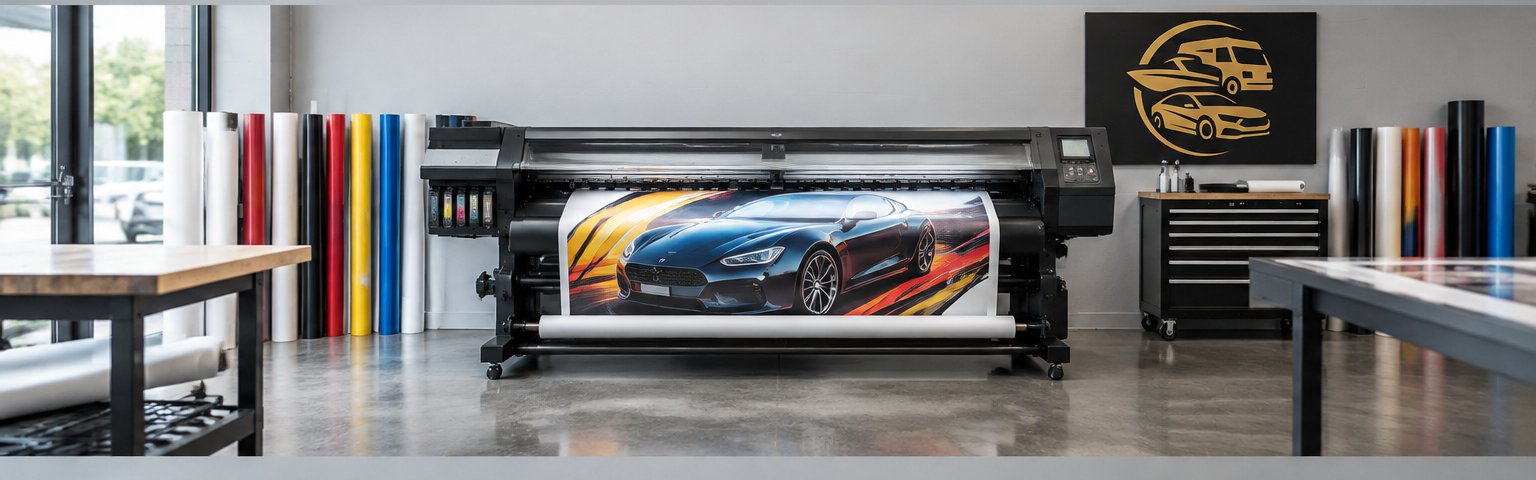
The Specialty Graphic Imaging Association publishes guidance on ink and substrate compatibility that professional shops follow. Ask your printer what ink and film combination they plan to use, and why. A shop that cannot answer that question clearly is a shop to skip.
Cut Vinyl vs. Printed Vinyl: Choosing the Right Method
Cut vinyl and printed vinyl solve different problems. Cut vinyl uses solid-colored film cut into shapes, with no printing involved. Printed vinyl lays full-color graphics onto a film base, then cuts the outline.
The choice comes down to complexity and color count.
- Choose cut vinyl when: your design uses one to three solid colors, needs to last many years, or features simple lettering.
- Choose printed vinyl when: you need photos, gradients, many colors, or detailed artwork.
- Cut vinyl strengths: thicker film, longer outdoor life, lower cost for simple jobs.
- Printed vinyl strengths: unlimited color, full-color printing, and design flexibility.
Most storefront lettering is cut vinyl. Most vehicle graphics with a logo, photo, and gradient background are printed. Many projects use both on the same surface, which is where a shop's experience shows.
Picking Materials for Custom Vinyl Decals
Material choice decides how long custom vinyl decals last. Two films dominate the market, and the difference matters more than most buyers realize.
Calendared vinyl is manufactured in large sheets and is the workhorse film. It suits flat surfaces and shorter-term projects. Cast vinyl is poured rather than pressed, so it conforms to curves and holds up longer outdoors.
White, Clear, and Specialty Films
For vehicle work, cast vinyl is the safer bet on curves and rivets. For flat wall panels and short campaigns, calendared film does the job at a lower cost. Ask what film is being quoted before you compare prices. A cheap quote often means a cheaper film.
Vinyl Lettering That Stays Readable at Speed
For a deeper look at font size, contrast ratios, and layout rules, see our guide on how to make vehicle graphics readable.
Vehicle Graphics: Surfaces, Curves, and Durability
We provide custom vehicle wraps for businesses that need to be seen on the road. You can review our vehicle wraps and fleet graphics.
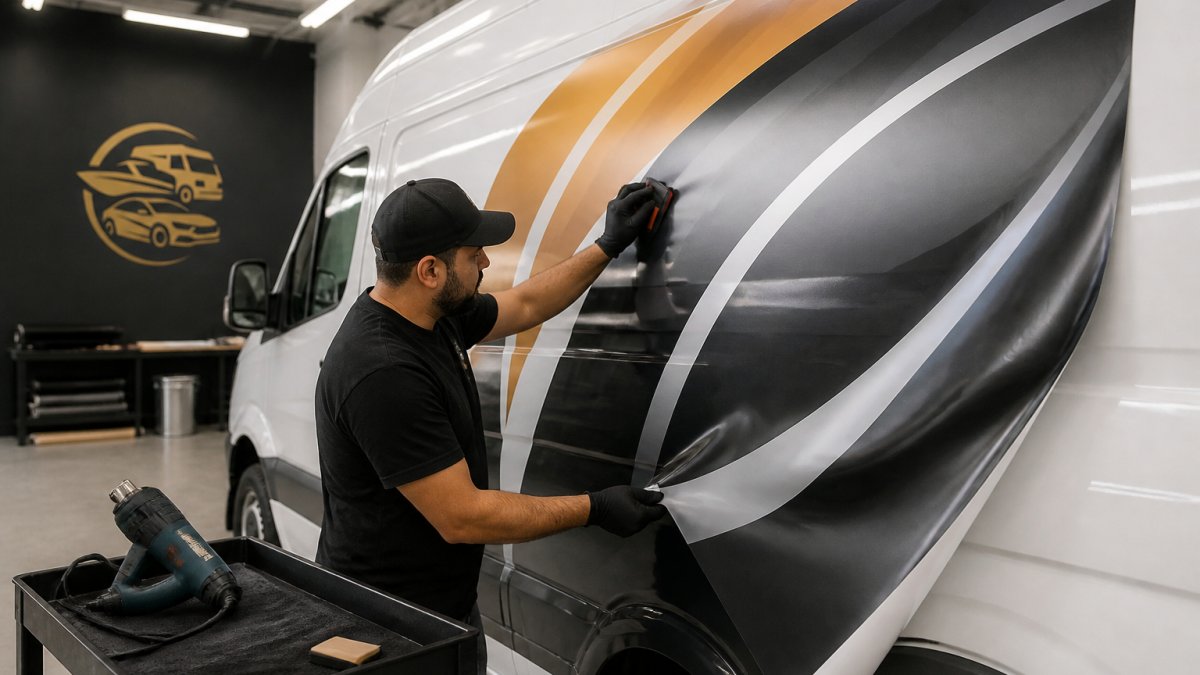
Vinyl Graphics Installation: Surface Prep and Removal
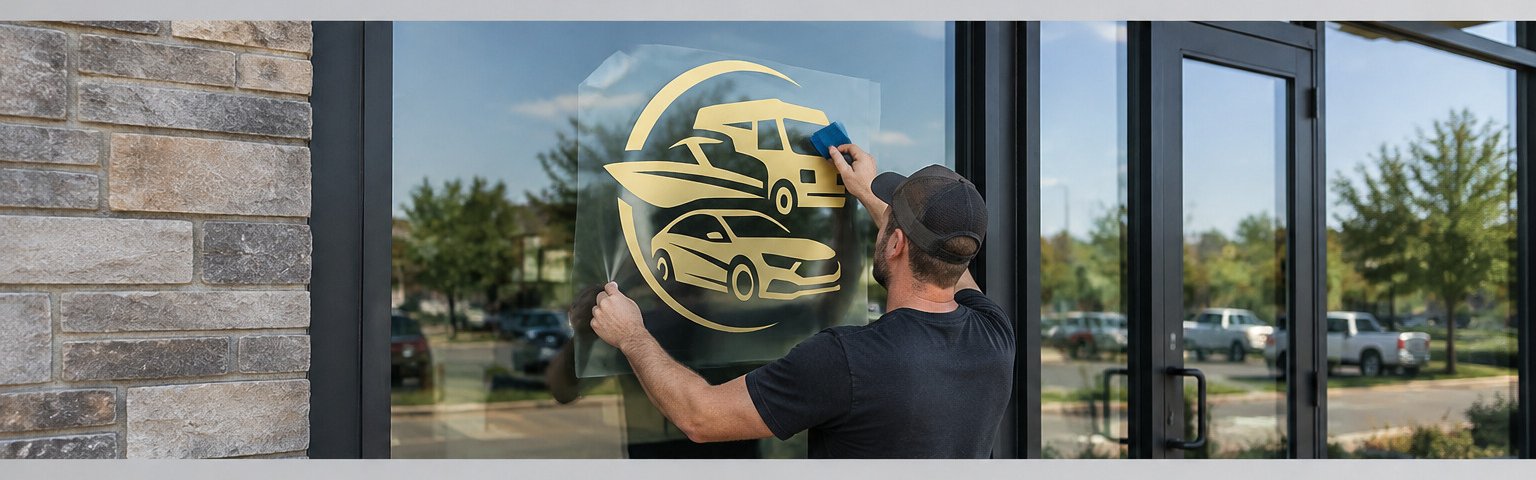
If your project involves windows or storefronts, our storefront and window graphics service covers storefront window graphics.
What Drives the Cost of a Vinyl Graphics Project
Pricing depends on several variables, and no honest shop quotes a number before understanding them. The main drivers:
| Cost Driver | What Affects It | Impact on Price |
|---|---|---|
| Surface area | Square footage of the graphic | Larger coverage costs more |
| Film type | Cast versus calendared | Cast film costs more |
| Print complexity | Colors, photos, gradients | More color work costs more |
| Installation | Flat wall versus curved vehicle | Curves take longer |
| Removal | Existing graphics to strip | Adds labor time |
| Design work | Artwork ready versus from scratch | New design adds cost |
A flat window decal and a full vehicle wrap are not comparable projects, even at the same square footage. Curves, rivets, and height all add labor.
For current pricing, request a quote rather than guessing from a chart.
Get a Quote for Your Next Vinyl Graphics Project
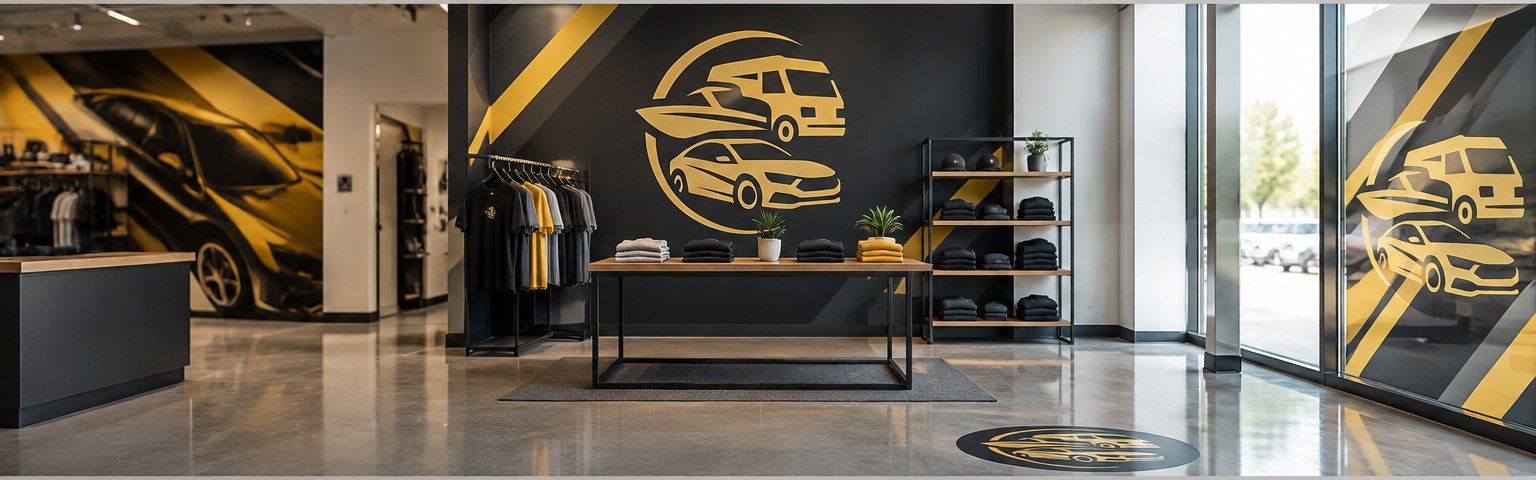
If you are planning vehicle graphics, wall murals, storefront window graphics, or floor decals, Pearl Wrapz provides visual branding solutions from concept through professional installation. We also serve as a local installation partner for client-supplied graphics.
Tell us about your vehicle, storefront, wall, window, or floor project and request a quote.
Frequently Asked Questions
What is the difference between vinyl decals and vinyl lettering?
Vinyl lettering is cut from solid-color film into individual letters or words, so it works best for text-only designs like a storefront name or truck door number. Custom vinyl decals are usually printed in full color and can carry logos, images, and gradients on a single sheet. Lettering suits simple typography; decals suit detailed branding. Many projects combine both, with cut lettering for the main message and printed decals for the logo.
How long do printed vinyl graphics last?
Lifespan depends on the film, the ink, and where the graphic sits. Vinyl graphics printing on quality cast film with UV-resistant ink typically holds up for several years outdoors, while cheaper calendared films can fade or peel sooner. Horizontal surfaces like hoods and floors take more sun and abrasion than vertical walls or windows. Proper surface prep and regular cleaning extend life further, and laminated prints resist scratching and fading better than unlaminated ones.
How do you prepare artwork for vinyl graphics printing?
Send vector files (AI, EPS, or PDF) with fonts converted to outlines, or a high-resolution raster file at 150 dpi or higher at final print size. Set colors in CMYK, not RGB, and confirm any brand color matches with a proof before production. Include bleed and cut lines where shapes are custom. A quick proof review catches sizing errors, low-resolution logos, and color shifts before anything goes on the printer.
How much does custom vinyl graphics printing cost?
Request a quote with your dimensions and intended surface.
Most vinyl projects go wrong before the printer ever runs: a low-resolution logo, the wrong film for a curved panel, or an install done in direct sun. We build each project to avoid those failures, with full-service support from artwork review through final installation on vehicles, storefronts, walls, and floors. Get started with Pearl Wrapz and put graphics on your surfaces that hold up and get noticed.