 How-to
7 Factors That Decide How Long Business Window Decals Last
Last Updated: November 16, 2026
Quick Summary
How long business window decals last depends on film quality, sun exposure, weather, installation side, adhesive type, surface prep, and cleaning habits. Interior installations generally last longer than exterior ones because they are shielded from weather, and perforated exterior graphics typically land in the same broad range as standard vinyl, roughly three to five years.
- UV exposure breaks down pigments first, so colors fade before the film fails.
- Window clings suit shorter campaigns, while window decals win on durability for years of use.
- Perforated film is punched with holes around 1.5 to 2 millimeters that let light pass through.
- A decal lasting five years on shaded glass may last half that on a sun-baked car window.
- Inspect monthly for edge lifting, bubbles, or dirt under the film.
Table of Contents
- How Long Business Window Decals Last: The Short Answer
- 7 Factors That Decide the Lifespan of Vinyl Window Decals for Business
- Indoor vs. Outdoor Window Decals: Why Placement Changes Everything
- Window Clings vs. Window Decals: Which Holds Up Longer
- Perforated Window Decals for Businesses: Lifespan and Tradeoffs
- Window Decals for Business on a Car: What Changes on the Road
- An Inspection and Replacement Schedule That Protects Your Brand
- Get a Quote on Storefront Graphics Built to Last
- Frequently Asked Questions
How Long Business Window Decals Last: The Short Answer
How long business window decals last depends less on the calendar and more on what you bought, where you stuck it, and how you treat it. Film quality, sun exposure, and care all shift the outcome, so treat any single lifespan figure as a rough planning number.
Here is the part most guides skip. A decal's physical durability and the time you choose to display it are two different things. Refreshing promotional graphics on a regular schedule is a merchandising decision, not evidence that the material has failed. Keep the two clocks separate and the rest of this guide makes sense.
industry guidance on decal materials and durability
7 Factors That Decide the Lifespan of Vinyl Window Decals for Business
Seven things drive how long a vinyl window decal for business actually stays readable. Film quality, sun exposure, weather, installation side, adhesive type, surface prep, and cleaning habits. Get most of them right and you land in the multi-year range. Get two or three wrong and you are reordering in a year.
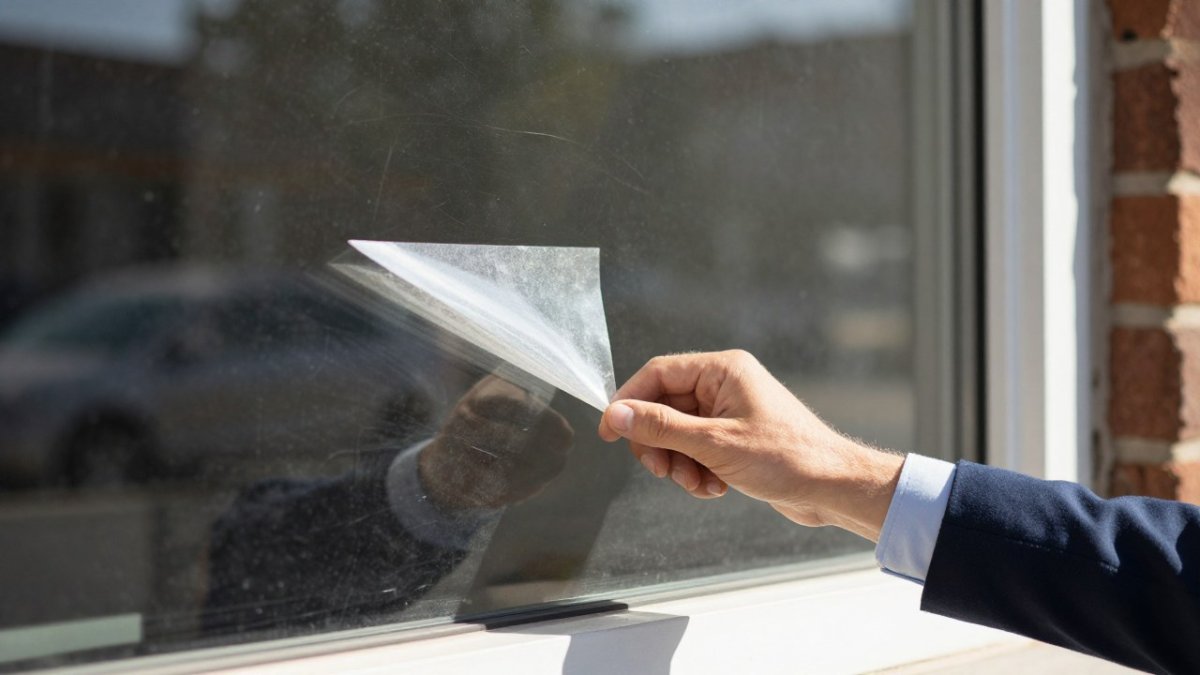
Vinyl Film Quality and Calendered vs. Cast Construction
Film quality is one of the main levers on lifespan. Calendered and cast vinyl behave differently, and the right choice depends on the surface and exposure.
Sunlight, Weather, and Which Side of the Glass You Install On
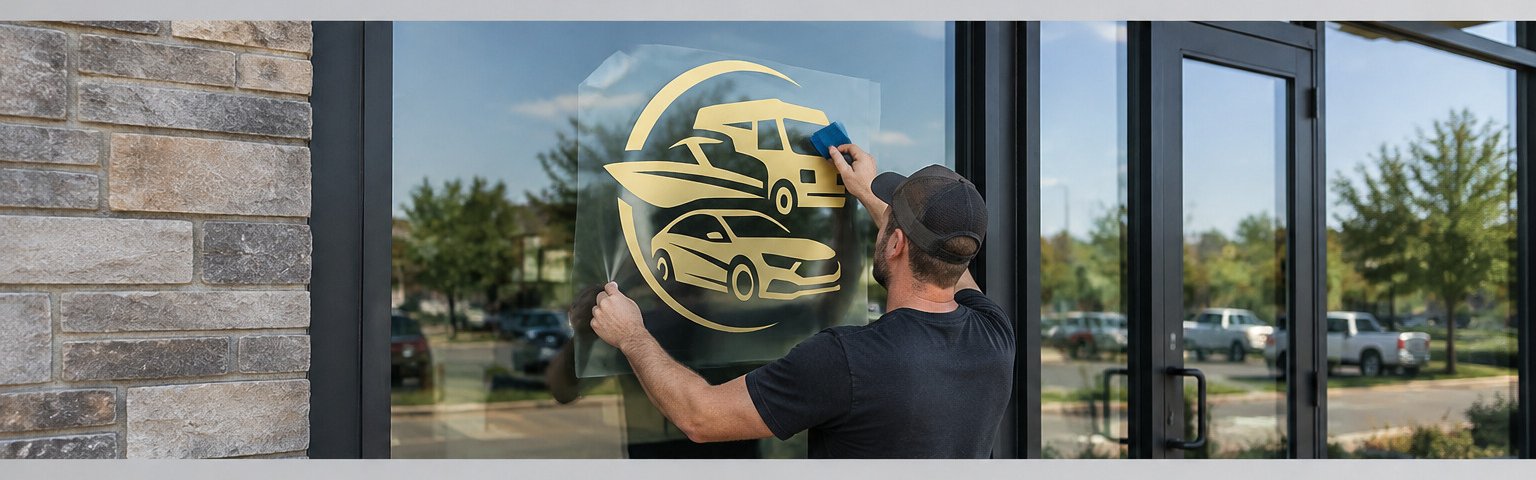
UV exposure is the silent killer. Sunlight breaks down the pigments first, so colors fade before the film fails. Temperature swings and moisture do the rest, working at the edges where adhesion is weakest. Interior installation on the inside of the glass shields the film from rain, ice, and direct sun, which is why indoor graphics routinely outlast exterior ones. Learn how to prepare surfaces for decals with cleaning, drying, and temperature tips that help vinyl stick and last.
window graphic material and application guide
Indoor vs. Outdoor Window Decals: Why Placement Changes Everything
Outdoor decals face the full weather cycle. Indoor decals face almost none of it. That gap is the single clearest predictor of service life, and it is where most generic lifespan answers go wrong. A storefront graphic on exterior glass is exposed to rain, ice, road grit, and direct sun at a low angle for hours a day. The same film applied to the inside of that same window sits behind glass that filters some UV and blocks weather entirely. Interior installations generally last longer than exterior ones because they are shielded from weather.
Placement also changes what "failure" looks like. Outdoors, you watch for fading, peeling, and cracking. Indoors, the usual issue is edge lifting from cleaning or handling. Match the film to the job and you stop guessing.
Inside-Glass vs. Outside-Glass Application
The side of the glass you install on changes exposure, durability, visibility, and the material that makes sense.
- Outside-glass application: The film takes the full weather load, so exterior-rated film is the safer choice.
- Inside-glass application: The film is protected from rain and ice, and the glass absorbs part of the UV. The tradeoff is that the adhesive and ink face the interior, so cleaning chemicals and abrasion matter more.
Lifespan Ranges by Placement and Exposure
Actual service life depends on film grade, sun angle, and care. Exterior graphics on sun-facing glass generally wear out sooner than interior graphics in shaded spots. Choose placement and film grade with margin for the period you need the graphic to last.
window graphic material and application guide
Window Clings vs. Window Decals: Which Holds Up Longer
Window decals generally suit longer-term use, while window clings, which stick through static and peel off cleanly, suit shorter campaigns. If you plan to change the message often, clings win on convenience. If you want years of use, decals win on durability.
comparison of retail window graphic formats
Compare formats by material, application, durability, and cost before you commit with our guide to retail window graphics printing options.
Perforated Window Decals for Businesses: Lifespan and Tradeoffs
Perforated window decals for businesses last about as long as standard vinyl of the same grade, but they carry one extra risk: the perforations trap moisture and dirt at the edges. On exterior glass, that means the border needs attention sooner. The payoff is a graphic that reads from outside while letting light and visibility through from inside. That tradeoff is usually worth it for storefronts that want full-window coverage without turning the shop into a cave.
How Perforation Changes Durability
Perforated film is punched with a grid of small holes, typically around 1.5 to 2 millimeters, that let light and sight lines pass through. The holes do two things to lifespan. First, they reduce the continuous surface area, so the film has less material to carry UV and weather stress, which can slightly shorten exterior life compared with solid vinyl of the same grade. Second, the cut edges around every hole give moisture and dirt a place to collect. On exterior glass, that shows up first along the perimeter and around the lower edge where rain runs.
Most practitioners find perforated exterior graphics land in the same broad range as standard vinyl, roughly three to five years, but with more edge maintenance along the way. Interior perforated graphics, protected from weather, often run longer.
The Visibility Tradeoff
Perforated film is chosen for what it does to the view from inside. From outside, the graphic reads as a solid image. From inside, the holes let occupants see out, which matters for retail, restaurants, and offices that do not want to sit behind an opaque wall of vinyl. That visibility is the reason to accept the extra edge care. If the window does not need see-through function, solid vinyl is simpler and slightly more durable.
Watch out: perforated film installed on exterior glass in a rainy climate can lift at the bottom edge first, because water collects in the holes and works under the adhesive. Inspect that edge after heavy weather.
Replacement Timing for Perforated Graphics
Because edge failure is the common mode, plan replacement around the border rather than the center. If the perimeter starts lifting or trapping dirt that will not clean out, the graphic is on its way out even if the printed image still looks good. For promotional perforated graphics, align replacement with the campaign calendar. For semi-permanent storefront coverage, inspect quarterly and budget replacement at the shorter end of the range if the window faces weather.
Compare formats by material, application, durability, and cost before you commit with our guide to retail window graphics printing options.
Window Decals for Business on a Car: What Changes on the Road
Window decals for business on a car face a harder life than any storefront. Road vibration, wash cycles, road salt, and constant sun angle all attack the film. That is why vehicle graphics need cast vinyl and a clean install. A decal that lasts five years on shaded glass may last half that on a rear window that bakes in a parking lot every day.
An Inspection and Replacement Schedule That Protects Your Brand
A simple schedule beats a fancy warranty. Check your decals on a fixed rhythm, fix small problems early, and replace before a customer notices the wear. Here is the routine we recommend:
- Monthly: Walk the storefront and look for edge lifting, bubbles, or dirt under the film
- Quarterly: Check color against a fresh sample; note any fading on sun-facing glass
- Seasonally: Clean with mild soap and water, never solvents or abrasive pads
- Annually: Photograph each graphic so you can spot slow changes
- Every 4-8 weeks: Refresh promotional messages per retail merchandising guidance
Before you order replacements, get the measurements right with our window measurement guide. And if you are planning seasonal swaps, our guide to seasonal graphics planning covers timing and materials.
Here is the routine we recommend for checking and replacing your decals.
| Frequency | What to do |
|---|---|
| Monthly | Walk the storefront for edge lifting, bubbles, dirt |
| Quarterly | Check color against a fresh sample for fading |
| Seasonally | Clean with mild soap and water, never solvents |
| Annually | Photograph each graphic to spot slow changes |
| Every 4-8 weeks | Refresh promotional messages per retail merchandising guidance |
Get a Quote on Storefront Graphics Built to Last
The real question is not how long a decal lasts. It is whether your storefront keeps selling for you the whole time it is up. Pearl Wrapz provides full-service visual branding, from concept through professional installation, across vehicles, walls, windows, and floors.
Ready to make your business impossible to overlook? Get a quote and we will match the film and install method to your windows. Storefront lettering, promotional windows, perforated film and decorative privacy vinyl help customers spot your business before they walk through the door.
guidance on extending vinyl decal lifespan
Your storefront is your first salesperson, and a faded decal sends the wrong message. Pearl Wrapz designs, prints, and installs storefront window graphics, vehicle wraps, wall murals, and floor decals for businesses across North Texas and southern Oklahoma. We handle the full job from concept to installation, so your graphics fit your surfaces and hold up to real conditions. Get started with Pearl Wrapz and put graphics on your windows that keep earning attention.
Frequently Asked Questions
How long do window decals last on a storefront?
Window decal lifespan varies widely because film quality, sun exposure, and cleaning habits all shift the outcome. A south-facing window in full sun will fade faster than a shaded entry door, even with identical material.
Do indoor window decals last longer than outdoor decals?
Yes, in most cases. Interior installation shields the vinyl from rain, temperature swings, and direct UV, which are the main causes of fading, cracking, and edge lifting. If your glass allows it, mounting decals on the inside face is generally one of the easiest ways to extend service life.
What is the difference between window clings and window decals?
Window clings stick through static or low-tack adhesion and peel off cleanly, which suits seasonal promotions and short-term graphics. Window decals use an adhesive backing and bond to the glass, giving them far better outdoor durability and a longer lifespan. For permanent storefront branding, decals win on longevity. For a sale that runs six weeks, clings save you the removal work. Match the material to how long the message needs to stay up.
How can you make business window decals last longer?
Install on the interior face of the glass where possible, clean with mild soap and water instead of ammonia-based glass cleaners, and prep the surface thoroughly before application so adhesion starts clean. Check edges every few months for lifting, since a small peel lets moisture in and speeds up failure. Avoiding pressure washing directly on the film also helps. A quick quarterly inspection catches problems while they are still cheap to fix.